Rouge Forum Dispatch: Hue and Cry!
December 23rd, 2018 / Author: rgibsonWe Say Fight Back!
LAUSD Teachers Have Set A Date To Go On Strike

For more than a year, parents of the 480,000 students in the Los Angeles Unified School District have anxiously watched a low-simmering contract dispute with the district’s teachers union, wondering when the feud might boil over.
On Wednesday, parents got their answer.
Teachers union leaders announced they will call a strike on Jan. 10 if they haven’t reached a contract agreement with LAUSD by then. It would be the first work stoppage called by United Teachers Los Angeles since the union’s nine-day strike in 1989.
At a press conference, UTLA president Alex Caputo-Pearl said union negotiators would not return to the bargaining table until the district takes “a different approach to having discussions.”
“We’re not going to go through another 20 months of unfair bargaining practices on the part of the district,” Caputo-Pearl said. “We have several core issues they’ve literally never responded to — around early education, regulation of charter [schools], limiting standardized tests.”
“The district knows where we are,” Caputo-Pearl added. “We’re right down the street from each other.”
The announcement comes one day after a neutral third party — known as a fact-finder — unveiled recommendations for settling the dispute.
But neither UTLA nor LAUSD is bound to accept the fact-finder’s suggestions. With the release of the fact-finder’s report, there’s nothing to legally stop UTLA from striking. laist.com/2018/12/19/lausd_teachers_set_a_strike_date.php
www.facebook.com/OaklandEA/videos/792874694394507/?t=54
A Database of Fugitive Slave Ads Reveals Thousands of Untold Resistance Stories
Freedom on the Move from Cornell University is the first major digital database of fugitive slave ads from North America.
Readers of the May 24, 1796 Pennsylvania Gazette found an advertisement offering ten dollars to any person who would apprehend Oney Judge, an enslaved woman who had fled from President George Washington’s Virginia plantation, Mount Vernon. The notice described her in detail as a “light mulatto girl, much freckled, with very black eyes and bushy black hair,” as well as her skills at mending clothes, and that she “may attempt to escape by water … it is probable she will attempt to pass as a free woman, and has, it is said, wherewithal to pay her passage.” She did indeed board a ship called the Nancy and made it to New Hampshire, where she later married a free black sailor, although she was herself never freed by the Washingtons and remained a fugitive.
The advertisement is one of thousands that were printed in newspapers during colonial and pre-Civil War slavery in the United States. The Freedom on the Move (FOTM) public database project, now being developed at Cornell University, is the first major digital database to organize together North American fugitive slave ads from regional, state, and other collections.

“Ironically, in trying to retrieve their property — the people they claimed as things — enslavers left us mounds of evidence about the humanity of the people they bought and sold,” Dr. Mary Niall Mitchell, professor of early American history at the University of New Orleans and one of the three lead historians on FOTM, told Hyperallergic. The other two historians are Joshua Rothman of the University of Alabama and Edward E. Baptist (author of the 2016 The Half Has Never Been Told: Slavery and the Making of American Capitalism) of Cornell University. hyperallergic.com/435183/freedom-on-the-move/?fbclid=IwAR2mttpGX-nSOOWsb-WcPMzY2z-I5sp5mfE0UPLg1wOJEyPm6RBzQKWLCkk


PSC President Bowen Among 17 Union Members Jailed for Protest
Seventeen members of the Professional Staff Congress, including union president Barbara Bowen, blockaded the entrance to Baruch College and were arrested Dec. 10 as part of their fight for a fair contract and to push the City University of New York’s Board of Trustees to demand the funding the cash-strapped university system needs from the state.
The union, which represents 30,000 CUNY employees, has not received an economic offer despite its contract expiring in November 2017. It has been campaigning for months to get the trustees, who were predominantly appointed by Governor Cuomo, to fight for the funding from the state that CUNY needs to maintain its deteriorating campuses and academic offerings and to support adjunct pay being doubled to $7,000 per course.
The university typically submits its budget request to the board, which was holding a meeting at the college at the time of the protest, in October, but had not done so yet. A CUNY spokesman said it would submit the request shortly.
“We went to make a demand: that CUNY produce a budget that stops defending austerity,” Ms. Bowen said. “Our members feel strongly that the trustees should not accept scarcity. Poverty funding for a university whose students are largely poor is unacceptable.”
The union has argued that state funding per student has decreased when adjusted for inflation. She said that CUNY had “cannibalized” its academic programming, increased tuition, and increasingly relied on adjuncts (who make up about 60 percent of CUNY’s instructional staff) in order to compensate for the lack of resources.
Many members held posters demanding that CUNY’s 12,000 adjuncts be paid $7,000 per course, which was comparable to what adjuncts at other colleges such as Rutgers University earned. They currently average $3,500 per class. thechiefleader.com/news/news_of_the_week/psc-president-bowen-among-union-members-jailed-for-protest/article_fd38eaca-ffb1-11e8-bae5-a323bf439404.html?utm_medium=social&utm_source=facebook&utm_campaign=user-share&fbclid=IwAR0dmWOJB4x1v_YIL8Sm2pH_Lp3yF2t7F2WmfYc3MPwAVFTCF5uAajUKWpI
www.facebook.com/teleSUREnglish/videos/343174612901389/?t=23
.
 And happy new years


Review: The Einstein File Exposes the FBI as an Enemy of All the People

The FBI’s secret war against the most famous scientist on earth failed to stop Einstein from supporting social justice at the height of the Red Scare.
“The Einstein File reminds us that the FBI has always been an enemy of the people and a tool of the oligarchs that rule the country.”
Most people living in the United States know little about Albert Einstein. What people do know of Einstein is usually confined to his many achievements in the realm of science. Fred Jerome’s updated version of The Einstein File: The FBI’s Secret War Against the World’s Most Famous Scientistanalyzes the enormous FBI file compiled on the world-renowned scientist. The book, originally published in 2002, has been updated to include contributions from fellow Black Agenda Report editor Ajamu Baraka and scientist David Suzuki as well as additional analysis on the implications of Einstein’s file for the current political situation. Jerome’s update provides readers with a glimpse into Einstein’s political life and an overview of a period of history characterized by the emergence of US hegemony, fascism, and worldwide socialist struggle.
The update of the book couldn’t come at a more pertinent time. The FBI and its intelligence partners are attempting a public relations revival under the Trump Administration. Like the first Cold War, Russia is the US intelligence apparatus’ object of scorn. blackagendareport.com/review-einstein-file-exposes-fbi-enemy-all-people?fbclid=IwAR0PS1b1BaPM7jtsztv3BrBVWwMaN-loZCa_Wq5MkjDoyZ49xX-GYXBdXhEhttps://norcalrecord.com/stories/511659245-paradise-families-sue-pacific-gas-and-electric-company-for-fires-attorney-alleges-company-knew-of-dangers?fbclid=IwAR0af3B13LkM9EfklT1XRt18VjMQuz2C1jnU5B-z04rswqPD8fwwFy0_JXs#.XBZm4wqR-YE.facebook

Opposition in Hungary Demonstrates Against Orban, in Rare Display of Dissent

Opponents of Hungary’s far-right prime minister, Viktor Orban, demonstrated on Sunday for the fourth day in the past five, in what has become one of the most sustained displays of street opposition to Mr. Orban since he entered office eight years ago.
The protests began on Wednesday as a reaction to two new laws: one that forces employees to work up to 400 hours of overtime a year, and a second that created a parallel judicial system that will severely undermine judicial independence.
By Sunday, the demonstrations had become a catchall protest against many aspects of Mr. Orban’s increasingly autocratic governance.
The protesters, whose numbers peaked at an estimated 15,000 on Sunday, held relatively small events, given that Mr. Orban was re-elected in April with nearly 50 percent of the vote in an election that observers said was free but not fair.
But analysts were struck by the rare unity of the protesters, which included several parties from across Hungary’s fragmented political spectrum, and also by their persistence. They braved below-freezing temperatures, despite being branded as treasonous agents of George Soros, the Hungarian-American philanthropist, by most major private and public media outlets, which are mostly controlled by allies of Mr. Orban.
Around 2,000 protesters marched several miles through the snow to the edge of Budapest late Sunday night to gather outside the state media headquarters, which has become a symbol of Mr. Orban’s government because of its constant support for the prime minister’s agenda.
“Factory of lies,” the crowd chanted outside the building… www.nytimes.com/2018/12/16/world/europe/hungary-protests-viktor-orban.html?smid=fb-nytimes&smtyp=cur&fbclid=IwAR1MmHz0RyT-rd2tLNGIFYkFZ3zDzPdnbipnjZReJYJqAmQkm6JuHjRsf1E

![American Labour's Cold War Abroad: From Deep Freeze to Détente, 1945-1970 by [Carew, Anthony]](https://images-na.ssl-images-amazon.com/images/I/41yxHobBIEL.jpg)
Abstract
With Anthony Carew’s new book, we are much closer to having a definitive empirical history of US Labor’s foreign policy operations across this 25-year period, including the AFL’s, the CIO’s, and the AFL-CIO’s foreign operations between 1945 and 1970. Based on extensive archival research and personal interviews by a careful and extremely meticulous scholar, we now have more details than all-but-a-few specialists may want to know. While not the first book to cover this subject, nor particular aspects of this subject, Carew’s intervention adds greatly to what we know and, in a number of ways, re-establishes the groundwork from which future works on this subject must build.
The Little Red Schoolhouse
www.facebook.com/theinterceptflm/videos/1695737547198526/?t=42
On top of a state audit, Sweetwater schools face $11 million negative fund balance after previously projecting a surplus
State and county officials say they have reason to believe that Sweetwater Union High School District officials committed fraud and are moving forward with a state audit that would examine whether the district covered up financial shortfalls, as state experts have alleged.
Meanwhile the district is facing a negative fund balance of $11 million at the end of this school year, after it claimed two months ago that it would end the year with a surplus.
The San Diego County Office of Education announced on Monday night that it would have the school district audited over potential fraud and mismanagement of funds after a state fiscal team revealed that the district has been misrepresenting its finances for years.
The district has repeatedly under-reported its spending and over-estimated its revenue, according to the fiscal team’s report. On more than 300 occasions, the district logged unexplained budget entries that made the district seem as if it were spending less than it actually was, said Michael Fine, CEO of the Fiscal Crisis and Management Assistance Team, the independent state agency that conducted an analysis of the district’s finances in October. www.sandiegouniontribune.com/news/education/sd-me-sweetwater-crisis-20181218-story.html?fbclid=IwAR33HKinGTRZjcZfoWcxVUprV5HrqzAQanVZuBKy7RLo1Q7hHybXx0Y-jUU

State Investigators Say There’s Evidence of a Financial ‘Cover-Up’ in Sweetwater
Sweetwater Union High School District officials have denied repeatedly they knew anything about the district’s overspending until it suddenly came to light last September. But a new state report suggests some district employees may have committed criminal fraud.
During a strange and dramatic board meeting Monday night – with reshuffled agenda items and a damning government report – state officials accused Sweetwater Union High School District employees of knowingly covering up the district’s ongoing financial crisis, triggered by massive overspending.
District officials have denied repeatedly they knew anything about the district’s overspending until it suddenly came to light last September. They have described it as an accident that could be attributed to innocent accounting errors and inefficient budget software. But the new report, from the state’s Fiscal Crisis and Management Assistance Team, challenges that narrative. It suggests some district employees may have committed criminal fraud.
FCMAT’s chief executive officer Michael Fine told board members that 302 entries in the district’s accounting system were doctored to create the impression the district had more money than it really did. “That my friends and colleagues, is a cover-up,” he said, eliciting an audible gasp from board members and others in the room.
Sweetwater’s superintendent Karen Janney refused to comment when I asked her about the suggestion of fraud. “We have a lot of work to do,” she said. When pressed again, she said, “I’m not gonna comment on that right now,” and walked out of the board’s public meeting room.
Fine did not speculate on who might have been behind the alleged cover-up. Several of Sweetwater’s top financial workers, including chief financial officer Karen Michel, retired over the summer. A Sweetwater spokesman told me previously those retirements were pre-planned. www.voiceofsandiego.org/topics/education/state-investigators-say-theres-evidence-of-a-financial-cover-up-in-sweetwater/?utm_source=Voice+of+San+Diego+Master+List&utm_campaign=6670a15283-VOSD_Podcast&utm_medium=email&utm_term=0_c2357fd0a3-6670a15283-81862829&goal=0_c2357fd0a3-6670a15283-81862829

City College to drop one third of class offerings over 7 years
City College of San Francisco administrators say they need to permanently cancel as much as a third of the school’s class offerings over the next several years to fix what they describe as 20-year structural budget problem.
The college passed a $185 million operating budget in August which includes an $11 million deficit, down from a $25 million deficit the year before. But in order to reach a balanced budget, City College Chancellor Mark Rocha told the Board of Trustees earlier this month that the college must stop offering approximately 400 historically under-enrolled credit classes. The college currently offers “dozens” of majors that graduate fewer than 10 students a year, he said.
“Community college over the years have what we call classic mission creep,” Rocha said at a Board of Trustees study session on Dec. 4. “These courses over a period of time have to go, or else the college cost structure will just be unsustainable.”
Rocha said the college needs to focus on expanding courses required for students to transfer to four-year universities, which generate the majority of the college’s revenue. A new state law also requires the college to receive more of its funding based on graduation rates. The administration characterized the new focus as “student-centered.”
Some City College advocates are pushing back against the idea of transitioning City College into what they described as more of a “junior college” than a “community college.”
“I think the question at the center of this structural problem is what a community college today in San Francisco should look like,” said Trustee Alex Randolph. “I don’t want [us] to forget that the third of the three core tenets of a community college in the state of California is lifelong learning.” www.sfexaminer.com/city-college-drop-one-third-class-offerings-7-years/?fbclid=IwAR295_c-oS9WXiwA3rDBc_N4pFjSjxVs0-gWMYDCxRSW00FD6zWz814SK0g
How should we make sure our kids learn to be good citizens?
Some years ago, a group of teachers from Florida traveled to what was then the U.S.S.R. to exchange ideas with their Russian-speaking counterparts. What the Soviet teachers most wanted from their guests, I heard afterward, was guidance on setting up democratic schools. They assumed that a country like ours, where the idea of democracy is constantly invoked, surely must involve children in meaningful decision-making from their earliest years.
The irony is painful. As numerous empirical investigations have confirmed, students from kindergarten to college are rarely permitted to shape their own education. Indeed, most American schools employ an assortment of rewards and punishments to make sure children do exactly what they’re told.
That story came to mind recently when I saw that a federal lawsuit had been filed charging the state of Rhode Island with failing to provide students “a meaningful opportunity to obtain an education adequate to prepare them to be capable citizens.” But what, exactly, is meant by that last phrase?
Joel Westheimer, a professor at the University of Ottawa who has written extensively on civics education, observes that the term “good citizenship” is typically employed to mean nothing more than “listening to authority figures, dressing neatly, being nice to neighbors, and helping out at a soup kitchen.”
What it should mean — what ought to define a democratic society’s approach to education — has more to do with asking difficult questions, organizing for collective action, insisting that people be able to participate in making decisions about matters that affect them, and confronting the systemic roots of problems. www.washingtonpost.com/opinions/how-should-we-make-sure-our-kids-learn-to-be-good-citizens/2018/12/21/92973430-02ed-11e9-9122-82e98f91ee6f_story.html?fbclid=IwAR0U0iBc2TPdCJRQtf5gge5-cL7CxQx8y6PmF8i8JOmLvfFloXkRJEQQKTQ&noredirect=on&utm_term=.7ff6e1798454
Best for Vets Colleges: The best schools for military students in 2019

Best for Vets: Colleges 2019 rankings
We surveyed hundreds of colleges across the country and used their answers, combined with federal data, to rank them in the areas of university culture, academic quality and outcomes, policies, student support and costs and financial aid.
Read about our top finishers below and check out the full list of schools in the charts to help inform your decision. rebootcamp.militarytimes.com/news/education/2018/10/22/best-for-vets-colleges-the-best-schools-for-military-students-in-2019/?utm_campaign=Socialflow+MAR&utm_source=facebook.com&utm_medium=social&fbclid=IwAR0kKSC5mv98oBeggjdH9u2i0HkqksfLSSeb_6jMb-Y0NwRBj2AkV8iPckU
Adjunct teachers to Bklyn College: Pay us more or students will suffer
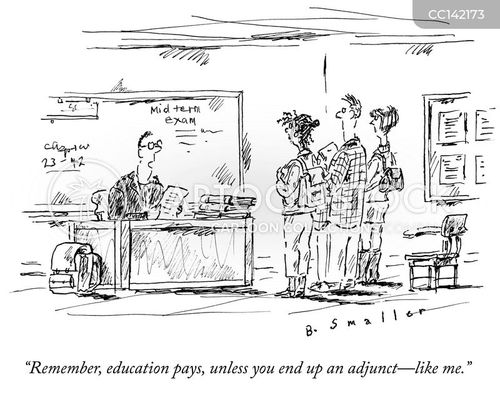
Call it a lesson in negotiation.
Brooklyn College students will suffer if city and state officials do not raise the salaries of its part-time adjunct professors, dozens of faculty members warned during a recent protest.
“I don’t get compensated for what I do outside the classroom, and as a result my students suffer,” said two-year adjunct English teacher Alyssa Northrop, who said she also works as a private tutor in order to make ends meet.
Northrop — who joined some 40 fellow teachers, staff, students, and union leaders at a Dec. 11 protest on the Flatbush campus — said she used to do a lot more for her pupils, but began to cut back on the time she invested in them because the college refused to invest more in her as an educator.
“I can’t give them all the comments that I want to give them, and I have a limit of how much time I lesson plan,” she said. “I limit myself to an hour of lesson planning for every class, which sometimes isn’t enough.”https://www.brooklynpaper.com/stories/41/50/mm-brooklyn-college-professor-protest-2018-12-14-bk.html?fbclid=IwAR2zND4uWnwvxPkvjrd0wJWgZsaJxhZZZRWE8ijlsLzX96c6ailZHRgbACU
Nap Time Boosts Learning, Studies Say
For schools looking for ways to squeeze in more instructional time for young learners, preschool and kindergarten nap time can be a tempting target.
But emerging sleep research suggests cutting out the afternoon snooze can come at the expense of some children’s longer-term ability to remember what they learn.
There’s no nationwide data on how many students nap in school. But in an ongoing series of experiments funded by the National Science Foundation, cognitive researchers Rebecca Spencer of the University of Massachusetts Amherst and Tracy Riggins of the University of Maryland are tracking how young children make the transition from napping to not, and what happens if that transition is forced.
A major review of sleep research in 2015 found no benefit to forcing children to sleep if they have outgrown it, but Riggins and Spencer suggest the transition out of napping is not uniform.
“Transitioning out of naps is not a switch,” Spencer said. “A lot of developmental milestones are happening around [early grades], and as they happen, the naps come and go. They may be done napping now, but a month from now, they may be back on for a nap.” www.edweek.org/ew/articles/2018/12/12/nap-time-boosts-learning-studies-say.html?r=1128661982&cmp=eml-enl-eu-news2&M=58700498&U=2075931&UUID=46048324bb29698793cb0230d913a743&fbclid=IwAR3qep6UQDfgynCliSg842LrpaXxnisX4Pql7dbqgpNByEj3NKJfhhVHiQo&mkey=B31B8A92-04ED-11E9-B882-9BE8C819EBCD
The International Hot War of the Rich on the Poor

‘A torrent of ghastly revelations’: what military service taught me about America
My first and only war tour took place in Afghanistan in 2010. I was a US Marine lieutenant then, a signals intelligence officer tasked with leading a platoon-size element of 80 to 90 men, spread across an area of operations the size of my home state of Connecticut, in the interception and exploitation of enemy communications. That was the official job description, anyway. The year-long reality consisted of a tangle of rearguard management and frontline supervision.
Years before Helmand province, Afghanistan, however, there was Twentynine Palms, California. From the summer of 2006 to the summer of 2007, I was trained as a lance corporal in my military occupational specialty of tactical data systems administration (a specialty I would later jettison after earning my officer commission in 2008). My schoolhouse was the Marine Corps Communication-Electronics School, which was abbreviated as MCCES, pronounced “mick-sess”. For many, the wider location became “Twentynine Stumps” or “the Stumps”. But for me it just became “the Palms”.
Our time at the Palms was preceded by three weeks of marine combat training at Camp Geiger, North Carolina, and, before that, 12 weeks of Marine basic training at Parris Island, South Carolina. The progression from Parris Island to Geiger to the Palms signalled, on the face of it, a slow return from barbaric intrigue to the tedium of civilisation. Boot camp was everything you might have gathered from films you’ve seen. www.theguardian.com/news/2018/dec/18/torrent-of-ghastly-revelations-what-military-service-taught-me-about-america-us-marine-corps-afghanistan?utm_term=RWRpdG9yaWFsX0d1YXJkaWFuVG9kYXlVUy0xODEyMTg%3D&utm_source=esp&utm_medium=Email&utm_campaign=GuardianTodayUS&CMP=GTUS_email&fbclid=IwAR2YQIzpKWFse7RlbPpAYF7UImjxgljOOm8qOA2zhlbu43hBS4i2FLs6ZfA
www.youtube.com/watch?v=gs7F83acCj4
US troops are leaving (Trump Fleeing), but ISIS is not defeated in Syria
The Trump administration’s sudden decision to order the immediate withdrawal of U.S. forces from Syria has caught the U.S. national security establishment by surprise — with many experts calling the decision a mistake.
President Donald Trump tweeted on Wednesday that ISIS had been defeated in the region, but many experts and national security analysts say that’s not the case.
“I think the most critical problem with this decision is actually the simplest: ISIS is not defeated,” said Jennifer Cafarella, an expert covering the Syria conflict for the Institute for the Study of War.
For one, ISIS still holds onto some rural villages scattered across the Middle Euphrates River Valley, where the terrorist group has shown some resiliency in launching large-scale counteroffensives.
Trump’s tweet came several days after U.S. partner forces liberated the last urban ISIS stronghold of Hajin, Syria, following months of coalition air and artillery support.
The Trump administration believes the remaining 1 percent of ISIS fighters can be eliminated by other regional and partner forces, a senior administration official told reporters Wednesday evening.
But ISIS has shown itself capable of bouncing back, even after major defeats and setbacks on the battlefield, and it’s not entirely clear U.S. partner forces have the willingness or ability to clear small scattered pockets of ISIS fighters without coalition support.
A potential major spoiler for the White House plan could be a large-scale Turkish military incursion into northern Syria to root out Kurdish fighters in the region — upending the primary U.S. ally fighting ISIS in the Euphrates Valley.
Such an operation would buy ISIS time and space to regroup and plan their next steps.
At the end of October, ISIS fighters launched a major attack as the local weather limited the U.S.-led coalition’s ability to back its partner force known as the Syrian Democratic Forces, or SDF, with air power. www.militarytimes.com/news/2018/12/19/us-troops-are-leaving-but-isis-is-not-defeated-in-syria/
Splitting With Trump Over Syria, American Leading ISIS Fight Steps Down

Brett McGurk, the special presidential envoy to the coalition fighting the Islamic State, has accelerated his resignation, telling colleagues this weekend that he could not in good conscience carry out President Trump’s newly declared policy of withdrawing American troops from Syria.
Mr. McGurk, a seasoned diplomat who was considered by many to be the glue holding together the sprawling international coalition fighting the terrorist group, was supposed to retire in February. But according to an email he sent his staff, he decided to move his departure forward to Dec. 31 after Mr. Trump did not heed his own commanders and blindsided America’s allies in the region by abruptly ordering the withdrawal of the 2,000 troops.
His decision comes right after the departure of Secretary of Defense Jim Mattis, whose own resignation letter was seen as a rebuke of the president’s actions in the region.
“The recent decision by the president came as a shock and was a complete reversal of policy that was articulated to us,” Mr. McGurk said in the email to his colleagues. “It our coalition partners confused and our fighting partners bewildered,” he added.
Here’s what may be driving a US troop withdrawal from Syria
/arc-anglerfish-arc2-prod-mco.s3.amazonaws.com/public/PTJHI75TMRCYVO2OT7RNITYBY4.jpg)
Reports of a total and immediate withdrawal of U.S. troops from Syria come amid heightening tensions — and growing risk of military confrontation — between the U.S. and Turkey.
Turkish forces want to push their troops into Syria. The U.S.-backed Syrian Kurds want to keep the Turkish forces out. And the U.S. has struggled for months to keep both players happy.
A confrontation between the U.S and Turkey, officially NATO allies, would create a geopolitical crisis at the heart of the world’s most powerful military alliance.
Northern Syria has been popping up in the news a lot over the past year, with periodic developments in a tangled web of paramilitary group acronyms and overlapping allegiances.
Caught in the middle are an unknown number of U.S. troops — estimated to be around 2,000 — who man outposts in the region for the stated purpose of preventing a resurgence of the Islamic State.
However, it’s often said that U.S. forces play another role as well: preventing a clash between the Kurds and Turkey.
A withdrawal of U.S. forces from Syria would potentially cede control to Turkey, resolving tensions between the two NATO allies. However, the drawdown would also abandon the Kurds, who provide the backbone of the defeat-ISIS ground campaign. While ISIS is definitely routed from their physical caliphate, the group has the potential to re-group, and re-emerge. www.militarytimes.com/news/your-army/2018/12/19/heres-what-may-be-driving-a-us-troop-withdrawal-from-syria/
However, it’s often said that U.S. forces play another role as well: preventing a clash between the Kurds and Turkey.
A withdrawal of U.S. forces from Syria would potentially cede control to Turkey, resolving tensions between the two NATO allies. However, the drawdown would also abandon the Kurds, who provide the backbone of the defeat-ISIS ground campaign. While ISIS is definitely routed from their physical caliphate, the group has the potential to re-group, and re-emerge.

Iraq’s Post-ISIS Campaign of Revenge
The corruption and cruelty of the state’s response to suspected jihadis and their families seem likely to lead to the resurgence of the terror group.

The Islamic State has been mostly destroyed on the battlefield, but the war is far from over. Air strikes cannot kill an idea, and so it has fallen to Iraq’s fractured security, intelligence, and justice systems to try to finish the task. But, insofar as there is a strategy, it seems almost perfectly crafted to bring about the opposite of its intent. American and Iraqi military officials spent years planning the campaign to rid Iraq of ISIS, as if the absence of the jihadis would automatically lead Iraq toward the bright democratic future that George W. Bush’s Administration had envisaged when U.S. forces invaded the country, in 2003. But ISIS has always derived much of its dangerous appeal from the corruption and cruelty of the Iraqi state. www.newyorker.com/magazine/2018/12/24/iraqs-post-isis-campaign-of-revenge
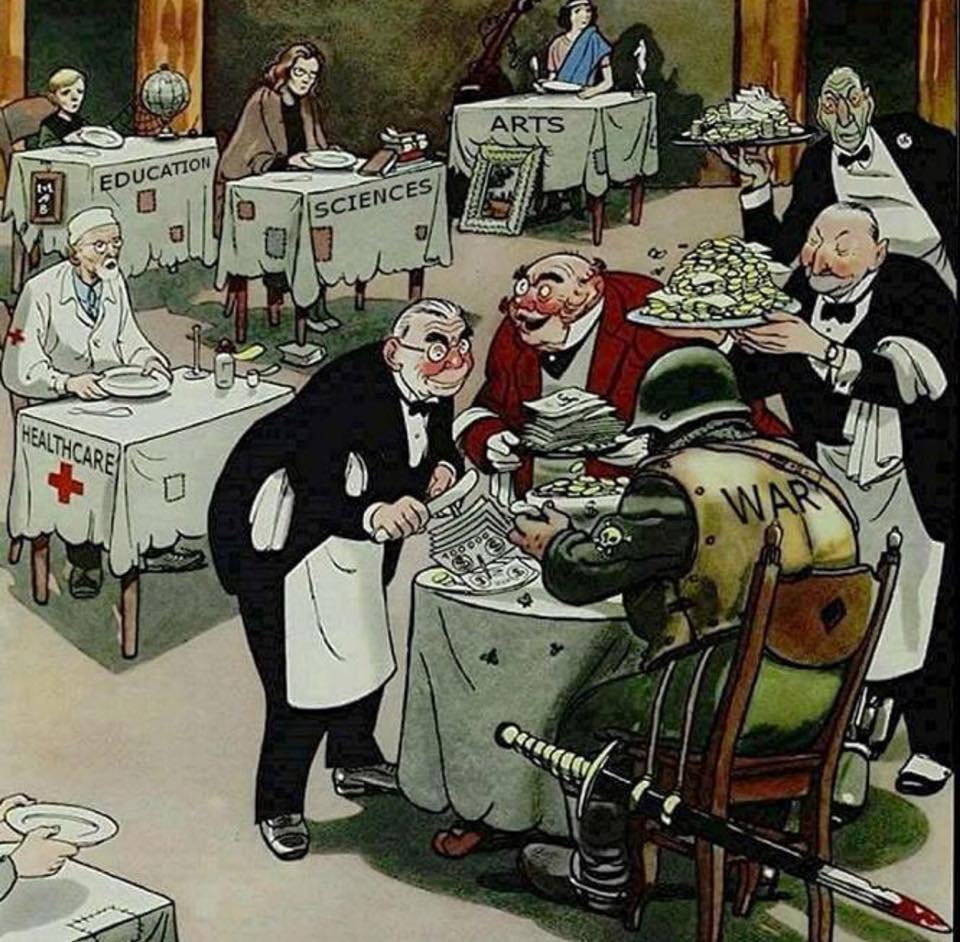
Reminder How Many Wars Is the US Really Fighting?
Hint: the answer is way more than you think.
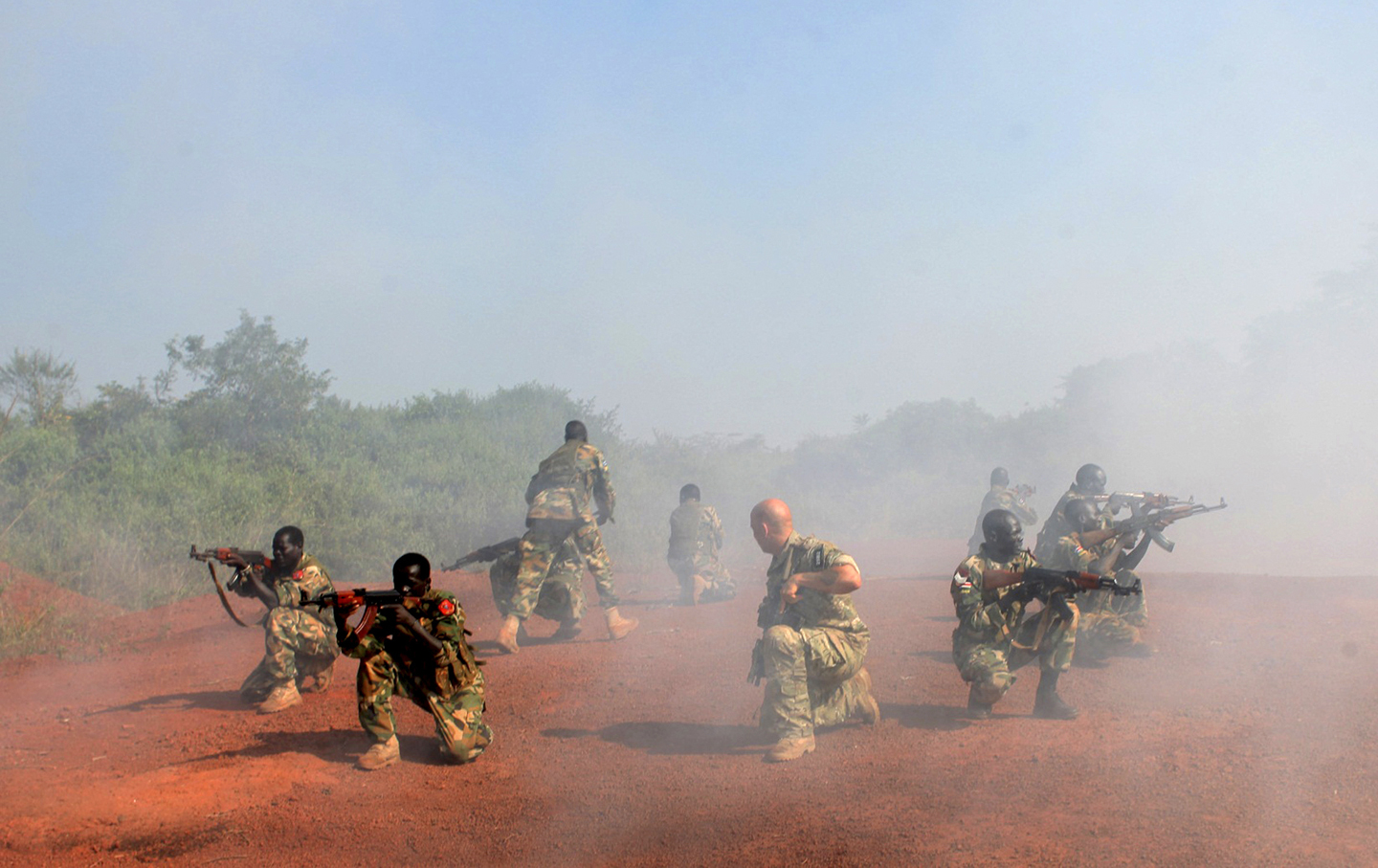
This year, US Special Operations forces have already deployed to 135 nations, according to Ken McGraw, a spokesman for Special Operations Command (SOCOM). That’s roughly 70 percent of the countries on the planet. Every day, in fact, America’s most elite troops are carrying out missions in 80 to 90 nations, practicing night raids or sometimes conducting them for real, engaging in sniper training or sometimes actually gunning down enemies from afar. As part of a global engagement strategy of endless hush-hush operations conducted on every continent but Antarctica, they have now eclipsed the number and range of special ops missions undertaken at the height of the conflicts in Iraq and Afghanistan.
In the waning days of the Bush administration, Special Operations forces (SOF) were reportedly deployed in only about 60 nations around the world. By 2010, according to the Washington Post, that number had swelled to 75. Three years later, it had jumped to 134 nations, “slipping” to 133 last year, before reaching a new record of 135 this summer. This 80 percent increase over the last five years is indicative of SOCOM’s exponential expansion which first shifted into high gear following the 9/11 attacks.
Special Operations Command’s funding, for example, has more than tripled from about $3 billion in 2001 to nearly $10 billion in 2014 “constant dollars,” according to the Government Accountability Office (GAO). www.thenation.com/article/how-many-wars-is-the-us-really-fighting/
Michael Klare, The Coming of Hyperwar
“Alexa, Launch Our Nukes!”
Artificial Intelligence and the Future of WarThere could be no more consequential decision than launching atomic weapons and possibly triggering a nuclear holocaust. President John F. Kennedy faced just such a moment during the Cuban Missile Crisis of 1962 and, after envisioning the catastrophic outcome of a U.S.-Soviet nuclear exchange, he came to the conclusion that the atomic powers should impose tough barriers on the precipitous use of such weaponry. Among the measures he and other global leaders adopted were guidelines requiring that senior officials, not just military personnel, have a role in any nuclear-launch decision.
That was then, of course, and this is now. And what a now it is! With artificial intelligence, or AI, soon to play an ever-increasing role in military affairs, as in virtually everything else in our lives, the role of humans, even in nuclear decision-making, is likely to be progressively diminished. In fact, in some future AI-saturated world, it could disappear entirely, leaving machines to determine humanity’s fate.
This isn’t idle conjecture based on science fiction movies or dystopian novels. It’s all too real, all too here and now, or at least here and soon to be. As the Pentagon and the military commands of the other great powers look to the future, what they see is a highly contested battlefield — some have called it a “hyperwar” environment — where vast swarms of AI-guided robotic weapons will fight each other at speeds far exceeding the ability of human commanders to follow the course of a battle. At such a time, it is thought, commanders might increasingly be forced to rely on ever more intelligent machines to make decisions on what weaponry to employ when and where. At first, this may not extend to nuclear weapons, but as the speed of battle increases and the “firebreak” between them and conventional weaponry shrinks, it may prove impossible to prevent the creeping automatization of even nuclear-launch decision-making.
Such an outcome can only grow more likely as the U.S. military completes a top-to-bottom realignment intended to transform it from a fundamentally small-war, counter-terrorist organization back into one focused on peer-against-peer combat with China and Russia. www.tomdispatch.com/blog/176509/?fbclid=IwAR20NNp0_KpJW8CrmDcnooe_epiwP_Zrp22ONMik_kC5JIMsbAQuOdIA4u4
U.S. to plan withdrawal of up to 7,000 troops from Afghanistan, officials say
The Pentagon is developing plans to withdraw up to half of the 14,000 American troops serving in Afghanistan, U.S. officials said Thursday, marking a sharp change in the Trump administration’s policy aimed at forcing the Taliban to the peace table after more than 17 years of war.
One official said the troops could be out by summer, but no final decision has been made.
President Trump has long pushed to pull troops out of Afghanistan, considering the war a lost cause. But earlier this year, he was persuaded by Defense Secretary Jim Mattis and others military leaders to keep troops on the ground to pressure the Taliban and battle a stubborn Islamic State insurgency. Officials said the latest White House push for withdrawal was another key factor in Mattis’ decision to resign Thursday.
The officials spoke on condition of anonymity to discuss internal deliberations.
U.S. troops stormed into Afghanistan in November 2001 in an invasion triggered by the Sept. 11 attacks.
Since then, America has lost more than 2,400 soldiers and spent more than $900 billion in its longest war. Three U.S. presidents have pledged to bring peace to Afghanistan, either by adding or withdrawing troops, by engaging the Taliban or shunning them, and by struggling to combat widespread corruption in the government.
The U.S. and NATO formally concluded their combat mission in 2014, but American and allied troops remain, conducting strikes on the Islamic State group and the Taliban and working to train and build the Afghan military.
Taliban insurgents, however, control nearly half of Afghanistan and are more powerful than at any time since a 2001 U.S.-led invasion. They carry out near-daily attacks, mainly targeting security forces and government officials. www.richgibson.com/blog/wp-admin/post.php?post=22378&action=edit&classic-editor
www.facebook.com/ComradeStalins/videos/737858006546732/?t=14
The International Economic War of the Rich on the Poor

‘Time for a Jubilee!’: US Student Loan Debt Hits Record $1.46 Trillion. Funny, That’s More Than GOP’s Corporate-Friendly Tax Giveaway
Student debt has doubled since 2009, but economists argue that forgiving all of it—that’s right, all of it—is something the country needs and can clearly afford.
It’s been almost a year since the Republican Party and President Donald Trump delivered their behemoth giveaway to the nation’s corporations and wealthiest individuals by passing a $1.5 trillion controversial tax bill that will ultimately blow a $5 trillion hole—or larger—in the nation’s budget.
On Monday morning, Bloomberg reported that the amount of U.S. student loan debt has more than doubled since 2009 and now sits at a record $1.47 trillion.
That’s interesting. Those numbers are very similar in size.
Meanwhile, also on Monday morning, Forbes noted how—due to the fraudulent practices of for-profit colleges and under orders from a federal court—the U.S. Department of Education will cancel $150 million in student loans, proving the federal government does, indeed, have the power to leverage its authority to correct an economic wrong.
As good as it might be for those students who are having their debt cancelled, $150 million is just 0.01 percent of the nearly $1.5 trillion in overall student debt liability.
While a majority loans are held by private institutions, Paul Della Guardia, economist at the Institute of International Finance, explained to Bloomberg that “over 90% of student loans are guaranteed by the U.S. Department of Education.” When the next economic downturn hits or if “a recession causes a rise in youth unemployment and triggers mass defaults,” warned Della Guardia, “this contingent liability could prove burdensome for the U.S. government budget.”
So if it’s possible to forgive a small portion of the overall student debt—and if the country can afford to give away $1.5 trillion in tax revenue, mostly to the wealthy and companies that don’t need it—why not just forgive all of the outstanding U.S. student debt? www.commondreams.org/news/2018/12/17/time-jubilee-us-student-loan-debt-hits-record-146-trillion-funny-thats-more-gops?utm_campaign=shareaholic&utm_medium=facebook&utm_source=socialnetwork&fbclid=IwAR052xbYiy5I2AzT2vRJuD4UpAMVtiJFffk0w0rLWi8H0C5Y2j-GoXokUtE

The less you eat, drink and buy books; the less you go to the theatre, the dance hall, the public house; the less you think, love, theorise, sing, paint, fence, etc., the more you save – the greater becomes your treasure which neither moths nor rust will devour – your capital. The less you are, the less you express your own life, the more you have, i.e., the greater is your alienated life, the greater is the store of your estranged being. Everything which the political economist takes from you in life and in humanity, he replaces for you in money and in wealth; and all the things which you cannot do, your money can do.

It can eat and, drink, go to the dance hall and the theatre; it can travel, it can appropriate art, learning, the treasures of the past, political power – all this it can appropriate for you – it can buy all this: it is true endowment. Yet being all this, it wants to do nothing but create itself, buy itself; for everything else is after all its servant, and when I have the master I have the servant and do not need his servant. All passions and all activity must therefore be submerged in avarice. The worker may only have enough for him to want to live, and may only want to live in order to have that.



GM laying off 50 workers at Brownstown plant
The loss of General Motors Co.’s plug-in hybrid Chevrolet Volt will affect nearly half of the employees at the automaker’s battery assembly plant in Brownstown Township.
GM filed a notice with the State of Michigan this week stating it will lay off 50 at Brownstown Battery, including 37 hourly workers represented by the United Auto Workers. A total of 116 workers are currently employed at the plant.
The layoffs at Brownstown, slated for Feb. 18, are expected to be permanent, GM said in its filing. Union represented workers will have the opportunity to transfer to other UAW-GM plants, but a GM spokeswoman said plans for those transfers have not been made yet.
On the Monday after Thanksgiving, GM announced a sweeping workforce and manufacturing restructuring for 2019 that will include idling five plants in the U.S. and Canada and cutting some 8,000 white collar jobs. www.detroitnews.com/story/business/autos/general-motors/2018/12/18/gm-laying-off-50-workers-brownstown-plant/2354625002/

by Gary Huck
Are You Ready for the Financial Crisis of 2019?
Here are five ways things could get bad for everyone.

For moneyed Americans, most of the past year has felt like 1929 all over again — the fun, bathtub-gin-quaffing, rich-white-people-doing-the-Charleston early part of 1929, not the grim couple of months after the stock market crashed.
After a decade-long stock market party, which saw the stocks of the S. & P. 500 index create some $17 trillion in new wealth, the rich indulged in $1,210 cocktails at the Four Seasons hotel’s Ty Bar in New York, in $325,000 Rolls-Royce Cullinan sport-utility vehicles in S.U.V.-loving Houston and in nine-figure crash pads like Aaron Spelling’s 56,000-square-foot mansion in Los Angeles (currently on the market for $175 million, more than double what it fetched just five years ago).
Will it last? Who knows? But in recent months, the anxiety that we could be in for a replay of 1929 — or 1987, or 2000, or 2008 — has become palpable not just for the Aspen set, but for any American with a 401(k).
Overall, stocks are down 1.5 percent this year, after hitting dizzying heights in early October. Hedge funds are having their worst year since the 2008 crisis. And household debt recently hit another record high of $13.5 trillion — up $837 billion from the previous peak, which preceded the Great Recession.
After a decade of low interest rates that fueled a massive run-up in stocks, real estate and other assets, financial Cassandras are not hard to find. Paul Tudor Jones, the billionaire investor, recently posited that we are likely in a “global debt bubble,” and Jim Rogers, the influential fund manager and commentator, has forewarned of a crash that will be “the biggest in my lifetime” (he is 76).
What might prove the pinprick to the “everything bubble,” as doomers like to call it? Could be anything. Could be nothing. Only time will tell if the everything bubble is a bubble at all. But, just a decade after the last financial crisis, here are five popular doom-and-gloom scenarios.
Happy holidays! www.nytimes.com/2018/12/10/style/2019-financial-crisis.html
5. Student Debt
Remember how the 2008 crisis was triggered by a bunch of people, who probably should not have been lent giant amounts of money in the first place, not making their mortgage payments? That was just the precipitating factor, but go back and stream “The Big Short” if none of this rings a bell.
Then fast-forward to 2018, where bad mortgages may not be the problem. Consider, instead, the mountain of student debt out there, which is basically a $1.5 trillion bet that a generation of underemployed young people will ever be able pay off a hundred grand in tuition loans in an economy where even hedge funders are getting creamed. Already, a lot of them aren’t paying and can’t pay.
The Emergence of Fascism as a Popular Mass Movement and The War on Reason

He’s Built an Empire, With Detained Migrant Children as the Bricks
The founder of Southwest Key made millions from housing migrant children. His nonprofit has stockpiled taxpayer dollars and possibly engaged in self-dealing with top executives.
Juan Sanchez grew up along the Mexican border in a two-bedroom house so crowded with children that he didn’t have a bed. But he fought his way to another life. He earned three degrees, including a doctorate in education from Harvard, before starting a nonprofit in his Texas hometown.
Mr. Sanchez has built an empire on the back of a crisis. His organization, Southwest Key Programs, now houses more migrant children than any other in the nation. Casting himself as a social-justice warrior, he calls himself El Presidente, a title inscribed outside his office and on the government contracts that helped make him rich.
Southwest Key has collected $1.7 billion in federal grants in the past decade, including $626 million in the past year alone. But as it has grown, tripling its revenue in three years, the organization has left a record of sloppy management and possible financial improprieties, according to dozens of interviews and an examination of documents. It has stockpiled tens of millions of taxpayer dollars with little government oversight and possibly engaged in self-dealing with top executives.
Showing the ambition that brought him from the barrio to the Ivy League, Mr. Sanchez seized the chance to expand his nonprofit when thousands more unaccompanied children began crossing the border during the Obama era. When the Trump administration needed to house migrant children it had separated from their parents, Mr. Sanchez took them in.
As immigration intensifies as a flash point of the Trump presidency, with tear gas being fired at a migrant caravan and the price tag for separating families continuing to rise, Mr. Sanchez is central to the administration’s plans. Southwest Key can now house up to 5,000 children in its 24 shelters, including a converted Walmart Supercenter that has drawn criticism as a warehouse for youths. The system is nearing a breaking point, with a record 14,000 minors at about 100 sites — a human crisis, but also a moneymaking opportunity.
Though Southwest Key is, on paper, a charity, no one has benefited more than Mr. Sanchez, now 71. Serving as chief executive, he was paid $1.5 million year — more than twice what his counterpart at the far larger American Red Cross made.

State employee charged in Flint water crisis lands big salary
Dr. Eden Wells, the state’s medical executive who has been criminally charged in connection with the Flint water crisis, landed a new, cushy job in Gov. Snyder’s administration that will pay her $180,000 a year.
The Flint Journal reports that Wells will serve as public health adviser for the Michigan Department of Health and Human Services.

The news comes just a week after a judge ordered Wells to stand trial on charges that she failed to timely inform the public of a deadly Legionnaires outbreak when Flint began using tainted city water.
Snyder maintains he knew nothing of the new job. motorcitymuckraker.com/2018/12/12/flint-water-insult-state-dem-boss-out-anti-semite-gets-house-arrest-wednesday-briefing/
www.facebook.com/SputnikNews/videos/376364716269885/?t=37
Dozens of fetuses, infant remains found after police raid on metro Detroit cemeteriesduring Detroit police raids on two metro Detroit cemeteries on Wednesday as part of the state’s investigation into Perry Funeral Home.
The cemeteries are the Gethsemane Cemetery on Gratiot Avenue near Conner in Detroit and the Knollwood Cemetery in Canton
Dozens of fetuses and infant remains were removed during Detroit police raids on two metro Detroit cemeteries on Wednesday as part of the state’s investigation into Perry Funeral Home. www.wxyz.com/news/dozens-of-fetuses-infant-remains-found-after-police-raid-on-metro-detroit-cemeteries?fbclid=IwAR1u0ZzRn68tlhunFrGu0rcQm8_b4tIAD9TGBzzYqugE3EvalGYnBAID1gc

Couple Who Named Their Child After Hitler Are Sentenced for Neo-Nazi Membership
A couple who named their child after Hitler have been sentenced to more than 10 years total in prison after they were convicted of being members of a banned neo-Nazi group that had sought to start a race war in Britain, the police said.
A judge in Birmingham Crown Court, in northwest England, sentenced the couple, Adam Thomas, 22, and Claudia Patatas, 38, on Tuesday, along with four other members, for being members of the violent National Action group after they were convicted last month. Mr. Thomas received six years and six months in prison, and Ms. Patatas five years.
The six were active members of the group, which has been banned under British antiterrorism law since 2016. But Mr. Thomas, a former security guard, and Ms. Patatas, a wedding photographer, stood out: The couple gave their child the middle name Adolf out of admiration for Hitler, the BBC reported.
In one image released by the West Midlands Police, the couple were photographed holding their baby alongside a flag emblazoned with a swastika. In another, Mr. Thomas is shown in a white robe reminiscent of those worn by the Ku Klux Klan while cradling a baby also dressed in white.
The details that emerged about the group’s activities added to concern about the recent rise of violent far-right movements in Britain, led by figures like the anti-Muslim activist Tommy Robinson.
“These individuals were not simply racist fantasists; we now know they were a dangerous, well-structured organization,” Detective Chief Superintendent Matt Ward, head of the West Midlands Counter Terrorism Unit, said in a statement about National Action in November, when the verdicts were announced.
“Their aim was to spread neo-Nazi ideology by provoking a race war in the U.K., and they had spent years acquiring the skills to carry this out,” he said.

During their investigation, the police found evidence that the group had researched how to make explosives, had gathered weapons and had a clear structure to radicalize others. www.nytimes.com/2018/12/20/world/europe/uk-neo-nazi-national-action.html
/arc-anglerfish-arc2-prod-mco.s3.amazonaws.com/public/MP4EBTGRPFFPHLV4QQ4ADWVY6Y.jpg)
Armory heist ringleader sentenced for stealing grenade launcher, machine guns, M16s & NVGs
The leader of an armory heist that brought in a major haul, including machine guns, grenade launchers, rifles, pistols, night vision goggles and various other items, was sentenced Friday to 10 years in prison, a Department of Justice release said.
Brandon Shane Polston, 33, admitted that on Thanksgiving Day 2017, he jumped the fence at an Army National Guard base in Lancaster, South Carolina, and entered the armory when he realized one of the building’s doors was unlocked and nary a soul was present.
With the military armament world as his oyster, Polston proceeded on his very own unlimited minute-shopping-spree jaunt through the aisles, except instead of filling a cart to the brim with food or toys, he accumulated weapons to sell for cash, cocaine and some of that ol’ fashioned, South Carolinian meth.
“Gear adrift,” as the saying goes.
Polston then hid the stolen arsenal in some nearby woods before transporting select items to a motel for individual sales and trades, the report said. www.armytimes.com/news/your-army/2018/12/19/armory-heist-ringleader-sentenced-for-stealing-grenade-launcher-machine-guns-m16s-nvgs/?utm_medium=social&utm_campaign=Socialflow+MAR&utm_source=facebook.com&fbclid=IwAR3MYpKfS8H89A0KjzyG5ogQCs5VgGLcuzayVTihbmyhe4yR7YT_Qe0sk5k
What could DEA opioid data reveal? CBS News Report Video Linked below
www.cbsnews.com/video/what-could-a-confidential-dea-database-reveal-about-the-opioid-crisis/
Solidarity for Never
Ex-UAW official Nancy Adams Johnson sent to prison
A high-ranking United Auto Workers official who implicated President Dennis Williams and others in a corruption investigation involving Fiat Chrysler Automobiles was sentenced to one year and one day in federal prison Tuesday.
Nancy Adams Johnson betrayed the trust of blue-collar workers by accepting thousands of dollars in illegal payments from Fiat Chrysler and spending the money on $1,100 Christian Louboutin shoes, private accommodations, golf resorts and lavish meals, according to the government. She also funneled tens of thousands of dollars of illegal payments from Fiat Chrysler to other senior UAW officials.
Johnson, 58, of Macomb Township is the seventh and final person sentenced in a widespread conspiracy to violate federal labor laws, a conspiracy that has reshuffled the top ranks of the auto industry and the labor union that represents 450,000 workers.
She, along with several others convicted so far, including former Fiat Chrysler Vice President Alphons Iacobelli, are cooperating with investigators and could serve as a bridge to a second round of criminal charges against additional union and auto executives….
Prosecutors last month labeled Jewell, who oversaw the union’s Fiat Chrysler department before abruptly resigning in January, an unindicted co-conspirator. They also refer to him in hundreds of pages of criminal filings as a high-ranking union leader who received approximately $50,000 worth of lavish gifts and benefits from Fiat Chrysler executives.
The gifts include a $2,180 Italian shotgun and a $30,000 party that featured strolling models who lit labor leaders’ cigars, all paid for with Fiat Chrysler cash that was supposed to be spent training blue-collar workers.
Investigators also have learned Jewell tapped a training fund to pay for more than $10,000 worth of golf resort accommodations in Palm Springs, California, and Disney World tickets, sources told The News. www.detroitnews.com/story/business/autos/chrysler/2018/12/18/former-uaw-official-nancy-adams-johnson-sentenced-prison/2339643002/
In Gupta Brothers’ Rise and Fall, the Tale of a Sullied A.N.C.

An Indian family rose to the heights of power and fortune in South Africa with the help of eager officials in the legendary party of Nelson Mandela, Joe Slovo’s poodle and hustler for the rich.
India’s most influential guru joined thousands of believers four years ago as the temple’s first stone was set in the ground.
It was a glorious day for its builders, the Gupta brothers, the sons of a local shopkeeper who had risen, almost magically, to become one of the richest families a world away in South Africa.
The three brothers had flown back on their private jet to start work on the temple, a 125-foot monument of pink sandstone and white marble that would tower over the tiny place where their father used to ride his bicycle to pray every day.
But one morning last month, as the sun struggled to break through the smog in Saharanpur, their hometown in India’s north, the giant yellow crane raising the temple stood still — in limbo, like the brothers themselves.
The Guptas are now in self-imposed exile in Dubai, evading arrest in South Africa, where they stand at the center of a scandal that has already brought down the nation’s president and exposed staggering amounts of corruption in the once-legendary party of Nelson Mandela.
Even here in India, the family’s legacy — so large that it has been elevated to myth — faces collapse. The new temple, dedicated to Lord Shiva in their father’s honor, is now being investigated for the same kind of self-dealing and fraud the family is accused of mastering in South Africa.
The rise and fall of the Gupta brothers is so improbable that in Saharanpur their story is told like a parable.
They began by selling shoes in South Africa and swiftly became central figures in the nation’s post-apartheid history, outsiders who broke into the very pinnacle of political power. Seemingly overnight, they joined the ranks of South Africa’s most influential families, playing a leading role in one of the biggest dramas after the end of apartheid: Who is getting rich, and how?

Mr. Mandela’s election as president in 1994 set off a scramble by leaders in his party, the African National Congress, to amass wealth. The early ones succeeded through ties with rich white South Africans. Many others turned to the brothers from Saharanpur. www.nytimes.com/2018/12/22/world/africa/gupta-zuma-south-africa-corruption.html?action=click&module=Top%20Stories&pgtype=Homepage
Spy versus Spy
How the CIA Trains Spies to Hide in Plain Sight (Video Within)
 Despite how easy it looks in James Bond movies and heist flicks, good disguises are hard to pull off. A good wig and some makeup don’t make you a new person—full transformation requires a full attitude adjustment. Just ask any contestant on RuPaul’s Drag Race. And when you’re a spy for the Central Intelligence Agency, being able to execute a perfect disguise can be a matter of life and death. Just ask Jonna Mendez.
“One of our officers, probably working out of the American embassy, would have surveillance 24 hours a day; they’d have teams of people following them,” says Mendez, who spent years as the CIA’s disguise chief. “But they had work to do; they had to communicate with people, clandestinely. The extremes we would go to to disguise those people was the most interesting, and the most challenging, part of the job.”
So what does the agency do to protect its assets in the field? A lot of it, Mendez says, involves hiding a person’s tell-tale features. If they have straight hair, make it curly. If they’re young, give them a few streaks of gray. It also helps to change the way they walk or talk by putting a brace on their leg or an “artificial palate” in their mouth. Americans have a certain way of standing—weight on one foot or the other—and if they’re trying to pass themselves off as European, it helps if they stand squarely on both feet. Good disguises, Mendez says, are almost always “additive;” you can make someone taller, heavier, or older, but “we can’t go the other direction.”
The CIA can also give a person the ability to do a “quick change.” If someone knows they’ll be trying to shake a tail, they can change their look as they move through busy sidewalks. Add a hat, change a shirt, add sunglasses, and—if it’s done right—it’ll look like someone has disappeared. www.wired.com/story/mastermind-cia-disguise/?utm_source=facebook&utm_social-type=owned&utm_brand=tny&utm_medium=social&mbid=social_cp_fb_tny&fbclid=IwAR2vXYXZsoPi5ZkLNnePPDyF5AZs3Iv1_ZWss9n759jOZ2cdJ3s96Yoewmw
The Magical Mystery Tour

Catholic Church in Illinois Withheld Names of at Least 500 Priests Accused of Abuse, Attorney General Says
The Catholic Church in Illinois withheld the names of at least 500 priests accused of sexual abuse of minors, the state’s attorney general said Wednesday in a scathing report that accused the church of failing victims by neglecting to investigate their allegations.
The preliminary report by Attorney General Lisa Madigan concludes that the Catholic dioceses in Illinois are incapable of investigating themselves and “will not resolve the clergy sexual abuse crisis on their own.”
The report said that 690 priests were accused of abuse, and only 185 names were made public by the dioceses as having been found credibly accused of abuse.
“The number of allegations above what was already public is shocking,” said Ms. Madigan in an interview.
The Illinois report is only the latest effort by state prosecutors to hold the Catholic Church accountable by scrutinizing the church’s own records. At least 16 state attorneys general have initiated investigations of varying scope since August, after a devastating grand jury report in Pennsylvania accused more than 300 priests of sexual abuse over 50 years, and accused bishops of covering up.
Unlike Pennsylvania’s voluminous grand jury report, the nine-page report in Illinois does not name accused priests or call out particular bishops for negligence.
But it tries to quantify the enormous gap between the number of accusations made by victims who dared to contact the church, and the number of accusations the church deemed credible. www.nytimes.com/2018/12/19/us/illinois-attorney-general-catholic-church-priest-abuse.html?action=click&module=Top%20Stories&pgtype=Homepage
Parents say Torrance Catholic school nuns embezzled millions over 20 years

Torrance police urged families from St. James Catholic School to speak with them if the parents believe their money was embezzled by two nuns who were recently arrested for it.
One parent, Jack Alexander, said he believes more than $3 million was swindled from the school over the last 20 years.
The case involves two nuns accused of embezzling $500,000 from the school, but the case is getting more complicated. Former school principal Sister Mary Kreuper and Sister Lana Chang bilked the school of tuition, fees and donation money, according to the Archdiocese of Los Angeles.
Parents like Alexander are outraged. He believes they took at least $50,000 from him.
“All the time that we’re hearing the school didn’t have enough money for this or for that, the reality is coming out is well they had the money, but she was just diverting it for her own personal use and enjoyment,” he said. “At schools you’ve got bake sales and PTAs and new uniforms and the new jerseys for the football team and all the things that you thought would be covered by the tuition – but she said they weren’t so you just wrote the extra check.” abc7.com/parents-say-torrance-nuns-embezzled-millions-over-20-years/4925738/
www.facebook.com/sourcepolitics/videos/312986535972780/?t=22
Megachurch preacher buys wife a $200,000 Lamborghini, tells parishioners ‘Don’t confuse what I do with who I am’
Megachurch Pastor John Gray bought his wife Aventer a $200,000 Lamborghini Urus for their eight year anniversary, which he felt a need to explain on a 23 minute clip on Facebook after catching a lot of flak.
Ironically, Gray, who said he started preaching in 1994, started the video with a transportation metaphor.
“I want to thank the people who have been walking with me,” the Greenville, S.C. based holy man said before explaining the lavish present.
“The reason my wife and i wanted to have an eight-year wedding celebration is because I needed a new beginning — eight is the number of new beginnings,” he said.
He also clarified that being a pastor is just his job and he’s a husband first.
First of all, it wasn’t a pastor that bought the car, it was a husband that bought he car — get that in your spirit,” he barked.
He also claimed that his money doesn’t come from the Relentless Church, where he preaches. Rather, Grey said it’s his side businesses that finances the sports car. www.sandiegouniontribune.com/news/religion/sd-megachurch-preacher-buys-wife-a-200-000-lamborghini-tells-parishioners-don-t-confuse-what-i-do-with-20181220-story.html
Jesuits name priests ‘credibly accused’of sexually abusing children, including in D.C. area
The Maryland Province Jesuits, a Catholic religious order with clergy serving throughout the Washington area and across eight states, released a list Monday of priests in the order who have been “credibly accused” of sexually abusing children since the 1950s.
The men accused of sexually abusing minors worked for decades in high schools, including Gonzaga College High School in the District; in colleges, including St. Joseph’s University in Philadelphia, the University of Scranton in Pennsylvania, Wake Forest University in North Carolina and several more; at Georgetown University’s hospital; at churches in the District and Baltimore; and other institutions.
One Jesuit priest, Neil P. McLaughlin, is believed to have abused children from the 1950s to the 1980s. Accusations came in from Pennsylvania, Maryland, Georgia, Massachusetts and New York. McLaughlin was removed from ministry in 2007.
Much of the abuse detailed in the reports dates back more than half a century. But other accusations are much more recent, and the list reveals that some of the Jesuit priests were not removed from ministry until well after 2002, when the Boston Globe published its expose of abuse in the church and the U.S. Catholic bishops committed to rooting out abusive priests. www.washingtonpost.com/religion/2018/12/17/jesuits-name-priests-credibly-accused-sexually-abusing-children-including-dc-area/?utm_term=.fc69dd98db2e

The Best and Worst Things in the History of the World
www.facebook.com/colbertlateshow/videos/275210760014087/?t=55
www.facebook.com/mlive/videos/10156495232498896/?t=11

www.facebook.com/coopmike48/videos/10218667930438215/?t=0
Sun over San Diego

Keep a Song in yer Heart

a smile on yer face and
Don’t Forget to
Smash the State
So Long
Mad Dog and Empire

On hiatus for awhile….