Rouge Forum Dispatch: WILDCAT!
Sunday, September 15th, 2019We Say Fight Back!
![Pro-Beijing and pro-democracy protesters clashed during a rally in Hong Kong [Isaac Lawrence/AFP]](https://www.aljazeera.com/mritems/imagecache/mbdxxlarge/mritems/Images/2019/9/14/060fd587ed0241be8c7700c97217e13a_18.jpg "Hong Kong protesters clash with pro-Beijing counterparts")
Nationalist Hong Kong protesters clash with pro-Beijing counterparts
Skirmishes reported at a pro-Beijing rally in Kowloon district as Hong Kong enters its 15th week of unrest.
Clashes between pro-Beijing demonstrators and Hong Kong‘s pro-democracy protesters have broken out in a crowded shopping area, the most recent skirmishes in months of protests in the city.
Hundreds of pro-Beijing demonstrators waved Chinese flags and chanted slogans on Saturday at Amoy Plaza in the densely packed Kowloon district.
Counter-protesters, who have been for months rallying against the government, quickly gathered there, sparking tension as the two camps heckled each other.
The standoff underlined the increased polarisation in the city as protests entered their 15th week.
The pro-Beijing demonstrators chanted “Support the police” and “China, add oil”, while also adapting a line used by the opposing pro-democracy protesters, loosely meaning: “China, keep your strength up.”
In one instance, a woman shouted “Hong Kong is China” at an angry passersby, who yelled obscenities in return. www.aljazeera.com/news/2019/09/hong-kong-protesters-clash-pro-beijing-counterparts-190914140138713.html

Appalachia’s Long, Proud Tradition of Labor Militancy
Harlan County, Kentucky, may be one of labor’s most hallowed battlegrounds. Its soil has been soaked in the blood of union men and women time and time again since the early 20th century, when major labor disputes between miners and greedy mine operators roiled the area. Now, almost a century after the infamous Battle of Blair Mountain in neighboring West Virginia, one of the biggest and bloodiest class war uprisings in U.S. history, suffering Appalachian coal miners have taken matters into their own hands once again.
On July 29, about 50 coal miners in Cumberland, Kentucky, banded together to stop a moving train. They blocked the tracks, refusing to allow the train, carrying $1 million worth of coal, to pass, according to Newsweek. They did the same thing the next day, and the next — literally putting their bodies on the line. Their protest began because Blackjewel, the company where they had until recently been employed, filed for bankruptcy in early July without paying the approximately $5 million in back pay the company owes to 1,700 miners, an attorney for the group told CNN. The standoff has now stretched on for weeks. The miners are not only dealing with financial hardships, but are also in legal limbo, unable to access health care benefits or file for unemployment, Cumberland mayor Charles Raleigh told CNN. The community and local churches have pitched in to help, www.teenvogue.com/story/why-harlan-county-kentucky-miners-blockading-coal-trains?fbclid=IwAR1UXwxHG4jDrHsVfsOnqSvZqR9OG-pHE1w3v24xej4RSfogOdMBTgC__YU

The Battle for a Paycheck in Kentucky Coal Country
…The origin of the blockade dates back to Monday, July 1st, when about a hundred men arrived to work at a mine, known as Cloverlick No. 3, up a narrow hollow in the small town of Cumberland. The miners were suited up, ready to go underground, when their superintendent informed them that Blackjewel had declared bankruptcy that morning. The men were untroubled. They were, at this point, accustomed to mass layoffs, to coal companies going belly-up. Apart from Blackjewel, half a dozen other coal companies have filed for bankruptcy since Donald Trump took office. In the last three decades, Kentucky has shed eighty per cent of its coal-mining jobs. (At last count, according to the federal Mine Safety and Health Administration, about sixty-six hundred coal-mining jobs remained in Kentucky, and fifty-three thousand remained nationwide.)
But, three hours after the miners started their shifts, they were unexpectedly called back outside and sent home. By Wednesday, their bank balances were negative. They had cashed their paychecks from the previous Friday to pay mortgages, utility bills, and medication costs, and to buy food and gas. When banks realized that the checks were cold, they deducted the money from the miners’ accounts. Some miners discovered that the checks had bounced when they heard from ex-spouses that their child-support contributions—withheld automatically from their paychecks—had evaporated.
At the time of the Chapter 11 filing, Blackjewel was the sixth-largest coal producer in the country, with underground and surface mines in four states, including two huge surface mines in Wyoming and Cloverlick No. 3. The company had about three hundred and thirty thousand dollars in the bank, and it owed about two hundred and forty million dollars in debts. Blackjewel, like almost every other coal company in Kentucky, had not been in compliance with a state law requiring coal companies to post a bond to cover workers’ wages in cases of sudden insolvency. www.newyorker.com/news/dispatch/the-battle-for-a-paycheck-in-kentucky-coal-country
The Little Red Schoolhouse
California college students’ biggest struggle is juggling jobs to pay for food and housing, survey finds
Nearly two-thirds of California students say their biggest obstacle to succeeding in college is costs—including food and shelter—and juggling jobs with school, according to a survey released Thursday by the California Student Aid Commission.
More than one-third of the 15,000 students who responded to the survey said they lacked stable housing and a steady source of food in the last month. Students in rural areas expressed the greatest hardship: 41% of Central Valley residents reported housing insecurity while 47% of those in the North Inland — the area of Shasta, Butte, Lassen, Plumas and Siskiyou counties — said they did not have regular access to sufficient nutritious food.
Among Los Angeles students, 30% reported housing insecurity, the lowest level in the state, and 33% faced food insecurity, the third-lowest level after the East Bay and wine country areas.
African American students faced the greatest struggles. More than half reported they lacked regular access to nutritious food and 40% said they did not have stable housing, the survey found. About 4 in 10 Latino students faced similar hardships, with about 3 in 10 Asian Americans and whites reporting such difficulties.
“Far too many students do not have the financial means to cover the real costs of college, www.latimes.com/california/story/2019-09-12/college-costs-huge-barrier-to-california-student-success
California expands ban on ‘willful defiance’ suspensions in schools (so one child can ruin the education of 30)

Is Anybody Reading the Syllabus? To Find Out, Some Professors Bury Hidden Gems
Last spring Adrienne Evans Fernandez, an adjunct professor of biology at Ivy Tech Community College, in Bloomington, Ind., started hiding a similar nugget in her syllabus. She asked students to send her an image of a dinosaur. Last week about 25 percent of students successfully responded to the request.
This year Damian Fleming, an associate professor of English and linguistics at Indiana University-Purdue University at Fort Wayne, asked his students in two different courses to send him a picture of a “cool medieval tattoo.” Again, the request was buried in the syllabus.
In his lower-level general-education class, the response rate was a little less than half, he said, and in an upper-level Chaucer class a little over half of students responded. www.chronicle.com/article/Is-Anybody-Reading-the/237641/?fbclid=IwAR1UacBU_I1-tEPaINTECmZwJ-Hw76BGLKR6hUSLtVk1LT5siwqtvKdRRLA
.jpg)
School Board Shakeup and Mad Principals (audio)
First, and seemingly out of the blue, San Diego Unified Trustee John Lee Evans announced in a post on his website that he would not be seeking re-election next year. He went on to drop several lines about how bad some of his colleagues have been since he was first elected more than a decade ago.
Voice education reporter Will Huntsberry joined Andrew Keatts on the podcast to break down exactly what happened. They also discussed the added news that school board member Mike McQuarry, who won’t be up for re-election until 2022, will also not be seeking reelection.
This portion of the podcast starts at 6:30.
Mad Principals
Next up, Huntsberry gave us some background on his reporting about a group of San Diego Unified high school principals who sent a series of memos calling out district leaders for not providing enough resources to run their programs.
“If you talk to board members, if you talk to officials, this is a district that is really punching above its weight. It’s doing better than other big-city districts,” Huntsberry said. “Turns out the principals of the high schools do not think that.”
Listen in at 15:00 to hear more. www.voiceofsandiego.org/topics/news/vosd-podcast-school-board-shakeup-and-mad-principals/?utm_source=Voice+of+San+Diego+Master+List&utm_campaign=07c12d1b40-VOSD_Podcast&utm_medium=email&utm_term=0_c2357fd0a3-07c12d1b40-81862829&goal=0_c2357fd0a3-07c12d1b40-81862829

Detroit students leave the city for suburban schools that aren’t much better
Among the key findings from both reports:
- Black students in particular were far more likely to attend schools in the suburbs with higher discipline rates than schools they could attend in the city. Non-black students, however, attended schools in the suburbs with lower rates of discipline.
- Overall, the students who left the city to attend schools were leaving schools that were lower in quality than the schools of the students who stayed.
- Detroit students had much higher rates of changing schools during the school year and between school years, compared with their peers in the rest of Wayne County, as well as in Oakland and Macomb counties.
- Students were less likely to change schools within a school year if the school they attended rates high in organizational climate, defined as having effective leadership, collaborative teachers, ambitious instruction, supportive environment, and involved families.
- On average, students who change schools within the city were not moving to schools that were significantly different than the ones they left. www.freep.com/story/news/education/2019/09/14/detroit-students-suburban-schools/2278181001/
 Rouger Bill Boyer in abandoned Detroit School
Call for Manuscripts: Contemporary Educator Movements: Transforming Unions, Schools, and Society in North America
Throughout the past two years, educators have led the most significant U.S. labor uprisings in over a quarter century, organizing alongside parents and community members for such common good demands as affordable health care, equitable school funding, and green space on school campuses (Bureau of Labor Statistics, 2019a; Bureau of Labor Statistics, 2019b). These uprisings can be seen as evidence of the growth of a new form of unionism, alternately called social justice or social movement unionism (Fletcher & Gapasin, 2008; Peterson, 1999; Rottmann, 2013; Weiner, 2012). They can also be understood as evidence of contemporary educator movements: collective struggles that have developed throughout the past decade with the goal of transforming educators’ unions, schools, and broader society (Stark, 2019; Stern, Brown, & Hussain, 2016). ices.library.ubc.ca/index.php/criticaled/announcement/view/182267?fbclid=IwAR1zl93b9mG-4UiygP8N_RZuz5nyMZED0bAozQRwjbyDniJbGw7lVVfYe0A
Felicity Huffman gets 14 days in prison in admissions scandal, possible sign of what’s to come for others charged
Felicity Huffman gets 14 days in prison in admissions scandal, possible sign of what’s to come for others charged

“Desperate Housewives” star Felicity Huffman was sentenced Friday to 14 days in prison for paying $15,000 to rig her daughter’s SAT scores in the college admissions scandal that ensnared dozens of wealthy and well-connected parents.
Huffman, 56, became the first of 34 parents to be sentenced in the case. She was also given a $30,000 fine, 250 hours of community service and a year of supervised release.
Before sentencing, she tearfully described her daughter asking why Huffman didn’t trust her.
“I can only say I am so sorry, Sophia,” Huffman said. “I was frightened. I was stupid, and I was so wrong. I am deeply ashamed of what I have done. I have inflicted more damage than I could ever imagine. I now see all the things that led me down this road, but ultimately none of the reasons matter because at the end of the day I had a choice. I could have said no.” www.sandiegouniontribune.com/news/courts/story/2019-09-13/felicity-huffman-gets-14-days-in-prison-in-admissions-scandal-possible-sign-of-whats-to-come-for-others-charged

The International Hot War of the Rich on the Poor
U.S. Has Spent Six Trillion Dollars on Wars That Killed Half a Million People Since 9/11, Report Says
The United States has spent nearly $6 trillion on wars that directly contributed to the deaths of around 500,000 peoplesince the 9/11 attacks of 2001.
Brown University’s Watson Institute for International and Public Affairs published its annual “Costs of War” report Wednesday, taking into consideration the Pentagon’s spending and its Overseas Contingency Operations account, as well as “war-related spending by the Department of State, past and obligated spending for war veterans’ care, interest on the debt incurred to pay for the wars, and the prevention of and response to terrorism by the Department of Homeland Security.”
The final count revealed, “The United States has appropriated and is obligated to spend an estimated $5.9 trillion (in current dollars) on the war on terror through Fiscal Year 2019, including direct war and war-related spending and obligations for future spending on post 9/11 war veterans.”
“In sum, high costs in war and war-related spending pose a national security concern because they are unsustainable,” the report concluded. “The public would be better served by increased transparency and by the development of a comprehensive strategy to end the wars and deal with other urgent national security priorities.”
The U.S. embarked on a global war on terror following the 9/11 attacks that killed nearly 3,000 and were orchestrated by Islamist militant group Al-Qaeda. Weeks later, the U.S. led an invasion of Afghanistan, which at the time was controlled by Al-Qaeda ally the Taliban. In March 2003, Washington overthrew Iraqi President Saddam Hussein, accusing him of developing weapons of mass destruction and harboring U.S.-designated terrorist organizations.
Despite initial quick victories there, the U.S. military has been plagued by ongoing insurgencies these two countries and expanded counterterrorism operations across the region, including Libya, Pakistan, Somalia and Yemen. In 2014, the U.S. gathered an international coalition to face the Islamic State militant group (ISIS), which arose out of a post-invasion Sunni Muslim insurgency in Iraq and spread to neighboring Syria and beyond.
Wednesday’s report found that the “US military is conducting counterterror activities in 76 countries, or about 39 percent of the world’s nations, vastly expanding [its mission] across the globe.” In addition, these operations “have been accompanied by violations of human rights and civil liberties, in the US and abroad.”
Overall, researchers estimated that “between 480,000 and 507,000 people have been killed in the United States’ post-9/11 wars in Iraq, Afghanistan, and Pakistan.” www.newsweek.com/us-spent-six-trillion-wars-killed-half-million-1215588?fbclid=IwAR0LJeTsSzBrmWgriY9TSF9gAaNVN6CGGmlQHhDgo0vRfkfJ4mKaMpolThg
Trump’s Acting National Security Adviser Said Nuclear War With USSR Was Winnable
President Donald Trump’s acting national security adviser, former Reagan administration official Charles Kupperman, made an extraordinary and controversial claim in the early 1980s: nuclear conflict with the USSR was winnable and that “nuclear war is a destructive thing but still in large part a physics problem.”
Kupperman’s suggestion that the U.S. could triumph in a nuclear war went against dominant theories of mutually assured destruction and ignored the long-term destabilizing effects that such hostilities would have on the planet’s health and global politics. www.huffpost.com/entry/charles-kupperman-nuclear-war-trump-nsa_n_5d7b9809e4b03b5fc88212fd

The Moral Logic of Mass Murderer Samantha Power (New Yorker)
…In Iraq, the U.S. occupation—in its incompetence and brutality—became emblematic of American decline. In 2014, less than three years after the Americans departed, the Iraqi Army collapsed, and the state nearly followed. In Afghanistan, U.S. officers, soldiers, and diplomats were almost entirely ignorant of the country and its languages, and relied on gangsters and strongmen to further their aims. The result was a state that functioned mostly as a sprawling extortion racket—the Americans called it VICE, for “vertically integrated criminal enterprise”—and that, by its lack of legitimacy, helped Taliban recruitment. Nearly two decades after the occupation began, U.S. diplomats are now negotiating a final exit from the country; the Afghan state seems unlikely to fare any better than the one the Americans built in Iraq.
Image from WSJournal:

Two Major Saudi Oil Installations Hit by Drone Strike, and U.S. Blames Iran
Drone attacks claimed by Yemen’s Houthi rebels struck two key oil installations inside Saudi Arabia on Saturday, damaging facilities that process the vast majority of the country’s crude output and raising the risk of a disruption in world oil supplies.
The attacks immediately escalated tensions in the Persian Gulf amid a standoff between the United States and Iran, even as key questions remained unanswered — where the drones were launched from, and how the Houthis managed to hit facilities deep in Saudi territory, some 500 miles from Yemeni soil.
Secretary of State Mike Pompeo accused Iran of being behind what he called “an unprecedented attack on the world’s energy supply” and asserted that there was “no evidence the attacks came from Yemen.” He did not, however, specify an alternative launch site, and the Saudis themselves refrained from pointing the finger directly at Iran.
President Trump condemned the attack in a phone call with Saudi Crown Prince Mohammed bin Salman www.nytimes.com/2019/09/11/world/russian-spy-kremlin.html?action=click&module=News&pgtype=Homepage
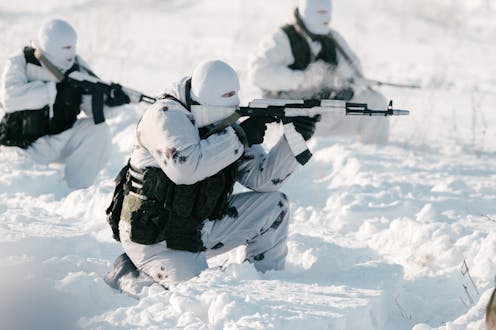
Michael Klare, A Formula for Catastrophe in the Arctic
Donald Trump got the headlines as usual — but don’t be fooled. It wasn’t Trumpism in action this August, but what we should all now start referring to as the Pompeo Doctrine. Yes, I’m referring to Secretary of State Mike Pompeo and, when it comes to the Arctic region, he has a lot more than buying Greenland on his mind.
In mid-August, as no one is likely to forget, President Trump surprised international observers by expressing an interest in purchasing Greenland, a semi-autonomous region of Denmark. Most commentators viewed the move as just another example of the president’s increasingly erratic behavior. Danish Prime Minister Mette Frederiksen termed the very notion of such a deal “absurd,” leading Trump, in an outburst of pique, to call her comments “nasty” and cancel a long-scheduled state visit to Copenhagen.
A deeper look at that incident and related administration moves, however, suggests quite a different interpretation of what’s going on, with immense significance for the planet and even human civilization. Under the prodding of Mike Pompeo, the White House increasingly views the Arctic as a key arena for future great-power competition, with the ultimate prize being an extraordinary trove of valuable resources, including oil, natural gas, uranium, zinc, iron ore, gold, diamonds, and rare earth minerals. Add in one more factor: though no one in the administration is likely to mention the forbidden term “climate change” or “climate crisis,” they all understand perfectly well that global warming is what’s making such a resource scramble possible.
This isn’t the first time that great powers have paid attention to the Arctic. That region enjoyed some strategic significance during the Cold War period, when both the United States and the Soviet Union planned to use its skies as passageways for nuclear-armed missiles and bombers dispatched to hit targets www.tomdispatch.com/post/176603/tomgram%3A_michael_klare%2C_a_formula_for_catastrophe_in_the_arctic/

Scenes from the new Cold War unfolding at the top of the world
Militaries are scrambling to control the melting Arctic.
For most of human history the very top of the globe has remained out of play, too cold, too distant, and too dangerous for the kinds of intense exploitation that have reshaped other regions. But the Arctic is now warming faster than any place on earth, and its protective barrier of sea ice—which once kept commercial and military ambition in check—is melting away.
Today, the Arctic is routinely described as an emerging frontier, and many polar nations, along with a few that have no Arctic borders, are angling for access to the region’s rich stores of fish, gas, oil, and other mineral resources. By most measures, the U.S. has lagged far behind other countries in this race, including Russia, Norway, and even China. That may be about to change...
Pompeo: “This is America’s moment to stand up as an Arctic nation and for the Arctic’s future,” Pompeo said. “Because far from the barren backcountry that many thought it to be … the Arctic is at the forefront of opportunity and abundance.” www.nationalgeographic.com/environment/2018/10/new-cold-war-brews-as-arctic-ice-melts/

Report: Soldiers hide in homes as ‘stronger’ Boko Haram now uses drones
Nigerian soldiers fighting Boko Haram in Borno are losing motivation and struggling to match the insurgents’ might, according to the New York Times.
The NYTimes said in a new report that contrary to the claims of the Nigerian government and the military that Boko Haram has been degraded, the insurgents’ power is growing in parts of the north-east.
They are said to operate with more sophisticated weapons including improved drones while soldiers struggle to keep up with “obsolete weapons and ineffectual strategy”.
DEGRADED OR MOTIVATED?
Nigerian authorities have continued to say the war against Boko Haram which has lasted a decade, has been largely successful.
President Muhammadu Buhari restated that claim four days ago when he said the insurgents have been degraded even though he admitted they still have “remnants”.
But the report quoted various sources as saying the military is demoralised and “on the defensive”.
“Some soldiers have complained they haven’t had a home leave in three years. Their weapons and vehicles have fallen into disrepair,” it said. www.thecable.ng/report-soldiers-take-cover-in-homes-as-boko-haram-grows-stronger-now-operates-with-drones
The International Economic War of the Rich on the Poor

Thomas Piketty’s new book uses data to trace how inequality changes ideology
“All large fortunes, whether inherited or entrepreneurial in origin, grow at extremely high rates, regardless of whether the owner of the fortune works or not. To be sure, one should be careful not to overestimate the precision of the conclusions one can draw from these data, which are based on a small number of observations and collected in a somewhat careless and piecemeal fashion. The fact is nevertheless interesting.
Take a particularly clear example at the very top of the global wealth hierarchy. Between 1990 and 2010, the fortune of Bill Gates — the founder of Microsoft, the world leader in operating systems, and the very incarnation of entrepreneurial wealth and number one in the Forbes rankings for more than ten years — increased from $4 billion to $50 billion. At the same time, the fortune of Liliane Bettencourt — the heiress of L’Oréal, the world leader in cosmetics, founded by her father Eugène Schueller, who in 1907 invented a range of hair dyes that were destined to do well in a way reminiscent of César Birotteau’s success with perfume a century earlier — increased from $2 billion to $25 billion, again according to Forbes.
In other words, Liliane Bettencourt, who never worked a day in her life, saw her fortune grow exactly as fast as that of Bill Gates, the high-tech pioneer, whose wealth has incidentally continued to grow just as rapidly since he stopped working. Once a fortune is established, the capital grows according to a dynamic of its own, and it can continue to grow at a rapid pace for decades simply because of its size. Note, in particular, that once a fortune passes a certain threshold, size effects due to economies of scale in the management of the portfolio and opportunities for risk are reinforced by the fact that nearly all the income on this capital can be plowed back into investment. An individual with this level of wealth can easily live magnificently on an amount equivalent to only a few tenths of percent of his capital each year, and he can therefore reinvest nearly all of his income. This is a basic but important economic mechanism, with dramatic consequences for the long-term dynamics of accumulation and distribution of wealth. Money tends to reproduce itself. boingboing.net/2019/09/12/brahmin-left.html?fbclid=IwAR0VOUNW9_-E9cZm0oTdYPhO3oMjGb-atXU2y4maR-LyNy5krVmfd9oVg7c
The Flint Water Crisis–More Dead than we knew–and why. Frontline video

‘It gets really bad after dark’: Crime persists on Gratiot in Detroit
Gratiot Avenue is home to several Detroit institutions: Eastern Market. The Faygo Bottling Plant. The Better Made Potato Chips factory.
And, police and residents complain, robberies and assaults.
From Gratiot’s starting point at Woodward Avenue downtown to the city limits at Eight Mile — a stretch covering about nine miles — there isn’t a three-block area that’s been crime-free this year, according to the Detroit police online crime map.
“These young boys are crazy out here, so I just go to work, come home and stay inside the crib most of the time,” said Daniel Andrews, 59, who lives a block off Gratiot near Eight Mile. “I don’t go outside if I don’t have to.”
Gratiot cuts through the 48205 ZIP code, one of the most dangerous in the United States, which is referred to by residents as “4820-die.” Gratiot also forms the western boundary of the high-crime neighborhood called “The Red Zone,” which is known for gang activity. www.detroitnews.com/story/news/local/detroit-city/2019/09/12/it-gets-really-bad-after-dark-crime-persists-gratiot-detroit/2122207001/
Below, Henry Ford accepts award from Nazis–1938

‘Junk’ rating for Ford from Moody’s hurts ability to borrow money, warns investors
Ford Motor saw its credit rating downgraded to “junk” status by Moody’s Investors Service late Monday.
The impact of the action, which occurred after the stock market closed, could increase the cost of borrowing money because the automaker is considered a higher credit risk — sort of like a higher interest rate on a car loan for someone with a low credit score.
“Ford remains very confident in our plan and progress,” the carmaker said in a statement. “Our underlying business is strong, our balance sheet is solid and we have plenty of liquidity to invest in our compelling strategy for the future. As Moody’s notes, we are already addressing two of its primary concerns: operating inefficiency and our China business. The agency also calls out our ‘sound’ balance sheet and liquidity position, and expects our global redesign and new products to contribute to improvement in earnings, margins and cash generation.” www.freep.com/story/money/cars/ford/2019/09/09/moodys-ford-credit-rating-junk-status/2268425001/
The Emergence of Fascism as a Popular Mass Movement and The War on Reason
Harrowing Cables Detail How the CIA Tortured Accused 9/11 Mastermind Khalid Sheikh Mohammed, Jeopardizing the Case Against Him
The CIA interrogation program has been well documented. But recently declassified cables, published here for the first time, reveal in new detail interrogators’ attempts to transform detainees into collaborators in the war against Al Qaeda.
The cables chronicle the banal and brutal moments of Mohammed’s so-called enhanced interrogation over a period of almost four weeks in 2003. They display in cold bureaucratic prose the thinking behind torture tactics, including waterboarding, “walling,” and sleep deprivation. And they exhibit a committed belief that enhanced measures always move detainees closer to an imagined breaking point that, once met, force them to produce more accurate information — a belief that the 2014 Senate torture report showed to have been wrong.
“Keep pushing,” a cable urges, “until [Mohammed] reaches his resistance limit, and then exploit his weakness when it occurs.” theintercept.com/2019/09/11/khalid-sheikh-mohammed-torture-cia/?utm_source=The+Intercept+Newsletter&utm_campaign=7e11c424d0-EMAIL_CAMPAIGN_2019_09_14&utm_medium=email&utm_term=0_e00a5122d3-7e11c424d0-128828597
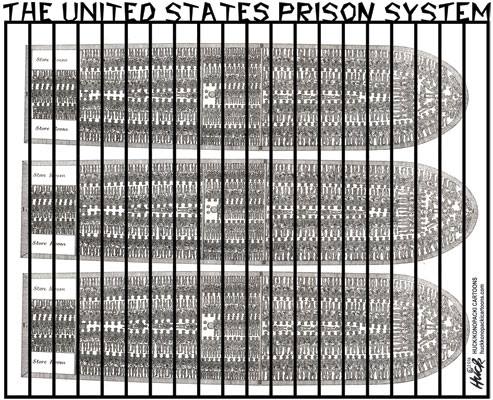 above by Huck
Wikileaks founder Julian Assange will stay in jail after sentence ends over fear he will abscond

WIKILEAKS founder Julian Assange is to stay in prison after his current custody period ends because of his “history of absconding”.
He was due to be freed next weekend from Belmarsh, South East London, after a 50-week sentence for jumping bail.
www.thesun.co.uk/news/9924913/wikileaks-founder-julian-assange-j

Kidnapping Machine ICE Is Building A ‘State-Of-The-Art’ ‘Urban Warfare’ Training Facility That Will Include ‘Hyper-Realistic’ Simulations Of Homes In Chicago And Arizona
The U.S. Immigration and Customs Enforcement agency is looking to build a “state-of-the-art” “urban warfare” training facility that will include “hyper-realistic” simulations of homes, hotels and commercial buildings in Chicago and Arizona.
In an acquisition form for the procurement of “hyper-realistic training devices” for a new training facility for its expanding Special Response Team (SRT) program, ICE outlined the details of plans for its new training center in a document published on the U.S. Federal Business Opportunities website.
While ICE sought to redact the location of the new training facility in the document, it was not successful in doing so.
After copying and pasting the document’s contents into a separate document, Newsweek was able to establish that the facility will be built at the Office of Firearms and Tactical Programs’ (OFTP) Tactical Operations Complex (TOC) at Fort Benning, Georgia.
Independent journalist Darwin Bond Graham initially pointed out that plans for the facility had been published on the Federal Business Opportunities website on Tuesday, pointing out key lines in the document on Twitter.
The new training center is expected to be part of an expansion at Fort Benning, a U.S. Army post straddling the Alabama-Georgia border next to Columbus, Georgia, which is expected to see as many as 50 additional buildings added to the site.
“At a minimum, the TOC will contain a multitude of basic, intermediate and hyper-realistic training devices, a tactical training warehouse, classroom facilities, and vehicle assault training area,” ICE said. www.newsweek.com/ice-hyper-realistic-training-facility-homes-chicago-arizona-1458721?fbclid=IwAR3QnkSo7ILMU1V2eyhcJy3xClQqAe7Ny0GfMp1bH_nBgWUpcmqe9ribQS4
Solidarity for Never
by Huck:

UAW: GM workers aren’t striking but other UAW workers are: Honor those Picket Lines! But WTF Happened to NO CONTRACT NO WORK? How about Wildcats?
Auto workers did not strike Saturday night, but 850 Aramark Corp. janitorial workers represented by the United Auto Workers at five General Motors Co. facilities in Michigan and Ohio did.
The workers are asking for better wages, health care and retirement benefits, the UAW said late Saturday.
Aramark workers do cleaning and other tasks at Flint Metal Center, Flint Engine Operations, Flint Assembly, Warren Tech Center and the metal center in Parma, Ohio. Flint Assembly builds the profit-rich Chevrolet Silverado and GMC Sierra heavy-duty trucks.
GM auto workers could refuse to cross Aramark picket lines. The UAW did not immediately say whether it would tell GM workers to honor those picket lines. Aramark workers have been on a contract extension for more than a year.
“We have UAW members who work long, hard hours and are still on public assistance,” said Gerald Kariem, director of UAW Region 1D, in a statement. “It’s shameful.”
Meanwhile, UAW auto workers themselves are not striking. Instead, the union will work without a contract until after the UAW executive board meets at midnight Saturday and the UAW-GM council meets Sunday to decide the next course of action. www.detroitnews.com/story/business/autos/2019/09/14/uaw-some-progress-gm-contract-negotiations-but-issues-remain/2329491001/

UAW presidents Gary Jones, Dennis Williams implicated in federal probe
United Auto Workers President Gary Jones is an unnamed union official accused in a federal criminal case Thursday of helping orchestrate a years-long conspiracy that involved embezzling member dues and spending the money on personal luxuries, three sources told The Detroit News.
In the criminal case, federal authorities identified four current and former senior officials as complicit in the embezzlement scheme. The government did not use their names but used labels to identify the union leaders, including “UAW Official A” and “UAW Official B,” and detailed numerous instances of misspending on golf, golf equipment, cigars, months-long rentals at private villas and falsified expense reports.
…The criminal case outlined a pattern of corruption stretching from California to Detroit and illegal spending by union leaders who spent more than $1 million of member dues on Palm Springs villas, steakhouse dinners, 107 rounds of golf, golf gear, cigars and $400 bottles of Louis Roederer Cristal Champagne.
The criminal charges were unsealed two days before a union contract deadline with General Motors Co., its target company, and Detroit’s other two automakers that is set to expire Saturday night, which could send 46,000 hourly workers to the picket line. The widening criminal investigation, marked by Aug. 28 raids at the homes of Jones and Williams, arguably complicate the most consequential negotiations since the bankruptcies a decade ago of two Detroit automakers. www.detroitnews.com/story/business/autos/2019/09/12/uaw-presidents-gary-jones-dennis-williams-implicated-in-federal-probe/2302410001/

UAW boss gets prison break for helping feds probe auto corruption
A federal judge Friday shaved seven months off the prison sentence of a former United Auto Workers leader who is cooperating with an ongoing corruption investigation of former union President Dennis Williams and the U.S. auto industry.
U.S. District Judge Paul Borman slashed the one-year sentence of former UAW official Nancy Adams Johnson to five months, according to an amended judgment filed in federal court.
The move comes one day after prosecutors filed a new criminal case implicating Williams and UAW President Gary Jones in an alleged conspiracy to embezzle and steal more than $1 million from the union. Sources told The Detroit News that Williams and Jones are unnamed union officials accused in the federal criminal case of helping orchestrate a years-long conspiracy that involved embezzling member dues and spending the money on personal luxuries.
Prosecutors have built the ongoing investigation, in part, thanks to cooperation from Adams Johnson, 58, of Macomb Township, who is emerging as a pivotal figure in a years-long probe that has led to charges against 10 people and nine convictions.
Adams Johnson served as the top administrative assistant to convicted UAW Vice President Norwood Jewell. www.detroitnews.com/story/business/autos/2019/09/13/uaw-boss-gets-prison-break-helping-feds-probe-bribery-scandal/2311953001/

A badge issued to some Leadec Industrial Services workers at General Motors Spring Hill Manufacturing in Spring Hill, Tennessee. The Leadec workers have been told to cross the picket line if GM hourly workers strike. (Photo: Leadec Industrial Services employee)
GM UAW janitors in Tennessee told to cross picket line if autoworkers strike
A local UAW leader has told janitorial workers at General Motors’ manufacturing plant in Spring Hill, Tennessee, to cross the picket line if GM hourly workers strike there.
Leadec Industrial Services workers are caught in the middle as the clock winds down to the midnight Saturday deadline for GM and the UAW to reach a tentative agreement for a new contract.
If the UAW does not reach an agreement with GM by deadline, the union can ask for an extension of the current contract and keep negotiating or order a strike against GM. www.freep.com/story/money/cars/general-motors/2019/09/12/gm-uaw-janitors-cross-picket-line-strike/2302304001/

Local UAWs prepare GM workers for Fake strike, extends Ford and FCA contract
General Motors’ UAW locals leaders are preparing union members for a strike.
Several union sources told the Free Press on Friday that UAW local unit leaders for GM’s plants around the country scheduled membership meetings Thursday and Friday to explain the protocol if union leaders call for a strike.
In documents, the local UAW emphasized that reporting correctly to a designated assignment is the only way strikers will qualify for the strike wage of $250 a week.
One local UAW officer told the Free Press on Friday that the UAW International told him that morning to come pick up picket signs. www.freep.com/story/money/cars/general-motors/2019/09/13/uaw-gm-strike-preparation-ford-fca-contract-extended/2311673001/

Spy versus Spy
In ‘Permanent Record,’ Edward Snowden Says ‘Exile Is An Endless Layover’
When Edward Snowden landed at the Moscow airport in 2013, having just divulged valuable secrets about National Security Agency surveillance programs, he was immediately stopped by Russian authorities.
A smooth-talking Russian intelligence officer sat Snowden down in an airport lounge and informed him the U.S. government had canceled his passport while Snowden had been in the air. The Russian added, “Life for a person in your situation can be very difficult without friends who can help. Is there some information, perhaps, some small thing you could share with us?”
Snowden, who had worked at the CIA as well as the National Security Agency, said he immediately turned down the offer to cooperate with Russian intelligence. But his stay in Russia has been far longer than expected.
“We landed at Sheremetyevo [Airport] for what we assumed would be a twenty-hour layover,” Snowden writes in his new book, Permanent Record. “It has now dragged on for over six years. Exile is an endless layover.”
And there’s no end in sight for a man who remains deeply polarizing.
The U.S. government has charged Snowden with violating the Espionage Act for providing journalists with details of the NSA’s top secret surveillance programs, and many in the national security community regard him as a traitor. www.npr.org/2019/09/13/759833071/in-permanent-record-edward-snowden-makes-his-case-against-mass-surveillance

Chinese woman convicted of trespassing at Mar-a-Lago, lying to authorities
Yuji Zhang, a Chinese national detained by the U.S. Secret Service at President Trump’s Mar-a-Lago resort in March, was reportedly convicted of trespassing and lying to federal agents in Florida federal court on Wednesday.
Zhang faces up to six years in prison, according to CNN. She was detained March 30 after being allowed into the club, mistaken for a relative of a member. While she initially said she had come to the South Florida property to swim, once inside she said she was attending a nonexistent event for Chinese American business leaders.
“She lied to everyone to get onto that property,” U.S. Attorney Ronaldo Garcia told jurors during his closing statement Tuesday, CNN reported.
At the time of her arrest, Zhang had four cellphones, a flash drive, a laptop and an external hard drive. Federal prosecutors initially said the flash drive contained malware but have since backtracked from the claim.
Prosecutors argued it was clear that “anyone with common sense” would have understood they were entering a restricted area, presenting photographs of signs identifying security details and checkpoints on the property as well as messages from a person in China telling Zhang not to go to Mar-a-Lago because the event she had hoped to attend had been canceled. thehill.com/regulation/court-battles/460948-chinese-woman-convicted-of-trespassing-at-mar-a-lago-lying-to

Israel accused of planting mysterious spy devices near the White House
The U.S. government concluded within the past two years that Israel was most likely behind the placement of cellphone surveillance devices that were found near the White House and other sensitive locations around Washington, according to three former senior U.S. officials with knowledge of the matter.
But unlike most other occasions when flagrant incidents of foreign spying have been discovered on American soil, the Trump administration did not rebuke the Israeli government, and there were no consequences for Israel’s behavior, one of the former officials said.
The miniature surveillance devices, colloquially known as “StingRays,” mimic regular cell towers to fool cellphones into giving them their locations and identity information. Formally called international mobile subscriber identity-catchers or IMSI-catchers, they also can capture the contents of calls and data use.
The devices were likely intended to spy on President Donald Trump, one of the former officials said, as well as his top aides and closest associates — though it’s not clear whether the Israeli efforts were successful. www.politico.com/story/2019/09/12/israel-white-house-spying-devices-1491351

What Spy? Kremlin Mocks Aide Recruited by C.I.A. as a Boozy Nobody
He drank too much, abandoned his sick, aged mother and — in Russia’s own account of the man portrayed in the United States as a highly valued spy burrowed deep into the Kremlin — he had no contact whatsoever with President Vladimir V. Putin.
Just hours after The New York Times and other American news outlets this week detailed how an unnamed Russian informant helped the C.I.A. conclude that Mr. Putin ordered and orchestrated a campaign of interference in the 2016 United States election, Russia fired up its propaganda machine to provide an entirely different picture of the same man, whom the state-controlled news media identified as Oleg B. Smolenkov.
Instead of a superspy who saw Mr. Putin regularly and became “one of the C.I.A.’s most valuable assets,” he is now being presented by Russian officials, state-controlled news outlets and pro-Kremlin newspapers as a boozy nobody with no access to Kremlin secrets.
No American official has ever claimed the C.I.A.’s source was part of Mr. Putin’s inner circle. But nevertheless, if Mr. Smolenkov, now aged 50, was the informant, he had a position of interest to the C.I.A. www.nytimes.com/2019/09/11/world/russian-spy-kremlin.html?action=click&module=News&pgtype=Homepage
The Magical Mystery Tour

A penthouse, limousines and private jets: Inside the globe-trotting life of Bishop Michael Bransfield

It was billed as a holy journey, a pilgrimage with West Virginia Bishop Michael J. Bransfield to “pray, sing and worship” at the National Shrine in Washington, D.C. Catholics from remote areas of the nation’s poorest state paid up to $190 for seats on overnight buses and hotel rooms.
Unknown to the worshipers, Bransfield traveled another way. He hired a private jet and, after a 33-minute flight, took a limousine from the airport. The church picked up his $6,769 travel bill.
That trip in September 2017 was emblematic of the secret history of Bransfield’s lavish travel. He spent millions of dollars from his diocese on trips in the United States and abroad, records show, while many of his parishioners struggled to find work, feed their families and educate their children.
Pope Francis has said bishops should live modestly. During his 13 years as the leader of the Diocese of Wheeling-Charleston, Bransfield took nearly 150 trips on private jets and some 200 limousine rides, a Washington Post investigation found. He stayed at exclusive hotels in Washington, Rome, Paris, London and the Caribbean.
Last year, Bransfield stayed a week in the penthouse of a legendary Palm Beach, Fla., hotel, at a cost of $9,336. He hired a chauffeur to drive him around Washington for a day at a cost of $1,383. And he spent $12,386 for a jet to fly him from the Jersey Shore to a meeting with the pope’s ambassador in the nation’s capital. www.msn.com/en-us/news/world/a-penthouse-limousines-and-private-jets-inside-the-globe-trotting-life-of-bishop-michael-bransfield/ar-AAHfrga

Missouri AG Refers 12 Ex-Priests For Prosecution Of Suspected Sexual Abuse
Missouri Attorney General Eric Schmitt announced Friday he is referring 12 former priests for criminal prosecution on charges of sexual abuse of minors following a 13-month-long investigation of church personnel records dating back almost 75 years.
The investigation, detailed in a 329-page report, covered more than 2,000 priests who have served in Missouri since 1945, and included some 300 deacons, seminarians and religious women in that state’s four dioceses. The investigators also spoke with survivors of clergy abuse and their families.
The inquiry found “credible allegations of 163 instances of sexual abuse or misconduct by Catholic diocesan priests and deacons against minors.” Of those, 83 have died. The statute of limitations has run out on 46 crimes allegedly committed by the 80 who are still alive, Schmitt said in a St. Louis news conference.
“The betrayal of trust and of innocence is devastating and in many instances incomprehensible,” said Schmitt.
The investigation found church officials “refused to acknowledge the victims and instead focused its efforts on protecting its priests,” by relocating priests without notifying law enforcement or offending priest’s old and new parishes.

Court declines House Democrats’ motion to intervene in genital mutilation case
A federal court has denied House Democrats’ request to intervene in the appeal of a Michigan criminal case in order to defend the constitutionality of the federal law prohibiting female genital mutilation.
House Democratic leaders over the summer had asked the U.S Circuit Court of Appeals for the 6th Circuit to let them take up the 1996 law’s defense after the Department of Justice declined to appeal a ruling invalidating the law as unconstitutional last year.
At the time, House Speaker Nancy Pelosi said the Trump administration’s “sudden refusal to advance legal arguments to defend a long-standing federal statute criminalizing this horrific act disrespects the health and futures of vulnerable women and girls.’’
Late Friday, the 6th Circuit denied the request to intervene and granted a motion by the parties to voluntarily dismiss the appeal www.detroitnews.com/story/news/politics/2019/09/14/court-declines-democrats-motion-intervene-michigan-genital-mutilation-case/2310965001/
The Best and Worst Things in the History of the World
www.facebook.com/denzel.robinson.184/videos/10156789608879217/?t=34

www.facebook.com/drfakenstein/videos/234343230816794/?t=6
www.facebook.com/wizardwishes/videos/648050199017199/?t=56

So Long

Let us remember, let us reflect
56 years since the murder of four young girls at the 16th Street Baptist Church in Birmingham, Alabama.
In an act of terror intended to intimidate civil rights activists who used the predominantly African-American church as a rallying point and organizing hub, Ku Klux Klan members planted a bomb under the building’s steps. It detonated at 10:22 a.m. on Youth Sunday, a day dedicated to the church’s young members, as the girls were getting ready for the service in a basement lounge.
During his eulogy for Denise McNair, Carole Robertson, Cynthia Wesley and Addie Mae Collins, Dr. Martin Luther King Jr. called the attack “one of the most vicious and tragic crimes ever perpetuated against humanity.” He sent a telegram to then-Alabama Gov. George Wallace, telling the state’s top segregationist: “The blood of our little children is on your hands.” Ten days before the bombing, Wallace had railed against the civil rights movement to The New York Times, saying, “What this country needs is a few first-class funerals.”
At that time, violent attacks on the civil rights movement were common in the city dubbed “Bombingham.” And in the decades since, researchers have laid bare the lack of political will to convict the perpetrators. Then-FBI Director J. Edgar Hoover blocked prosecution of the case, and the FBI failed to turn over thousands of files to prosecutors, including audio surveillance tapes. www.splcenter.org/news/2019/09/13/weekend-read-let-us-remember-let-us-reflect?fbclid=IwAR3tTixJzjcH4rbB4g5VRreJyhobRXQFT_3JXKrRikVSRADeIOJlQTGTKs0
Frederic Pryor, Player in ‘Bridge of Spies’ Case, Dies at 86
Arrested and jailed on an espionage charge in East Berlin in 1961, Mr. Pryor, an economics student, became part of a famous prisoner exchange.
Frederic Pryor, an American graduate student who was jailed in East Germany in 1961 on suspicion of espionage but later freed as part of the famous prisoner trade between the United States and Soviet Union dramatized in Steven Spielberg’s film “Bridge of Spies,” died on Sept. 2 at his home in Newtown Square, Pa. He was 86.
By the summer of 1961, Mr. Pryor had been living in West Berlin for two years. Despite worsening Cold War tensions, he crossed regularly into East Berlin to interview economists and government officials for his doctoral thesis about the Soviet bloc’s foreign trade system.
While the Berlin Wall was being built, Mr. Pryor drove into East Berlin on Aug. 25, 1961. He tried to visit an engineer who had helped him on a research project, but when he reached her apartment she was gone.
The Stasi, East Germany’s secret police, which had been staking out her home, arrested Mr. Pryor for aiding in her escape to the West. After they found a copy of the thesis in his car, they charged him with being a spy. www.nytimes.com/2019/09/11/world/europe/frederic-pryor-player-in-bridge-of-spies-case-dies-at-86.html