Rouge Forum Dispatch: Having Long Noted the Rise of Popular, Structural, Fascism.
We Say Fight Back!
Congratulations on the publication of:

Women’s March on the Pentagon
October 20-21, 2018


The Least Important Election in History
The US midterm elections are almost upon us, but this is a needless bit of inconsequential trivia. It really doesn’t matter, all the Republicans can win or all the Democrats, either way it means about as much as a fart in a category 5 hurricane. The net result of actions taken, legislature composed, or honesty with the populace will be inconsequential.
The primary difference between the two parties, who are merely playing a game of good cop/bad cop, is only if you’d prefer to see a rapid more authoritarian style ecological collapse or if you’d prefer one with a soothing dulcet voice reassuring you everything will be fine at two minutes to midnight. Neither have a workable plan on the table to get the US in a sustainable ecological state before it all comes crashing down, nor do they have any notion of creating such a plan.
The best the Democrats offer are conciliatory gestures in policy shifts, but they have not the wisdom, fortitude, or honest intent to stop the devilish system at the heart of the matter. During Obama’s presidency there was a time when the Democrats controlled the senate and the house and they showed their true motivations. They did nothing to pass policies to assuage the damage being done and stop the plunder of Earth for profit, or to end the wars, or to quell mass incarceration system. Even with total control we know what the Democrats offer amounts to platitudes.

And keep in mind, even if the entirety of congress, SCOTUS, and POTUS were controlled by Democrats we still would not find ourselves in a sustainable society, as again, no workable sustainability assessment and plan of transition has ever been done by the party, nor do they care to do something which might lead to such blunt truths. Because those truths would mean decentralization of power and reduction of economic influence for the neoliberal class. Monied elites know the game, and their egos immediately nix any solution set that doesn’t focus the onus of power and attention directly on them.
So what are we doing here in this system? We don’t have a pragmatic solution on the table to avoid ecological collapse, which is accelerating much faster than most think. Meanwhile the people are simultaneously being told by proponents of faux democracy that by not voting for one of the major political parties one is wasting a vote, and not voting at all is akin to a crime by their measures.
What such people either don’t know or won’t admit to is that we are stuck in a system where a financial gun is held at the head of the people at all times. This communicates to the people that if you change the elites will pull their money out of markets and go Galt. The powers that be will make sure you suffer for your insolence to stand against them. They’ll make finding a livable wage impossible and thus threaten the plebs housing, supply of food, and ability to get healthcare for no other reason than a puerile egotistical insistence that they get their way. They simply don’t care what happens to the people or mother Gaia. Their self interests are why they sought out power to begin with and they’ve devoted their lives to it, and they aren’t surrendering anytime soon. www.counterpunch.org/2018/10/26/the-least-important-election-in-history/

A Faculty Plea: Put Books Back in the Bookstore

The Middlebury College bookstore doesn’t look much like a bookstore anymore. The textbooks that once lined its shelves were cleared out earlier this year, making room for more Middlebury-branded sweatshirts, T-shirts and coffee mugs.
The bookstore, like many others at colleges across the country, had suffered from declining sales and stiff competition from large online retailers such as Amazon.
Bookstore manager Erin Jones-Poppe said it simply didn’t make sense for the store to keep stocking books.
“We cannot afford to continue in our current trajectory,” she told the student newspaper, The Middlebury Campus, in 2017.
Last spring the bookstore switched to an online-only book ordering system, offered through MBS Textbook Exchange — a company that was acquired by Barnes and Noble Education in 2017. Under the new system, students can still pick up their books from the bookstore — they just have to order them online first. The system is supposed to provide better value for students. But faculty members at Middlebury say they want the old system back. www.insidehighered.com/news/2018/10/24/middlebury-professors-call-books-be-returned-campus-bookstore?fbclid=IwAR2l2jLZYv7sMff-3HfcuoP9E6NMNDSecc93M0EQUCJl46tE9rZmw-6gZqM

Why The NYT NOW HAS A WAR Section
Dear New York Times,
I know you wonder what I, Richard Gibson, think. So, I will tell you my thoughts of the day regarding your newspaper.
As you surely remember, I have subscribed to the print edition for more than 25 years, making me, like, important.
Plus, I am an emeritus professor: proof of smart.
First and above all, I want a War Section. I want maps, charts, troop deployments, lines of march, costs in blood and money on all sides–the grand strategy, strategy, and tactics. Sure, it can be a few weeks delayed to protect people, but since the USA is engaged in perpetual war, a fully militarized society, I would like to know about the wars.
I like the opinion pages, even if I think most of the opinions are stupid or trivial.
Pages two and three are a waste. Perhaps put the wars, or opinions, there.
I do not want a Food Section. Luckily, I can eat.
I do not want a goddamned “Pets” section. Are you insane?
I do not want a Style Section (I do not give a flying fuck about Dapper Dan).
I rather like, but could easily live without, a Travel Section.

OLYMPUS DIGITAL CAMERA
If the New York Times Magazine is going to be a comic book, then I never, ever, want it.
I like the book review section but you could poll readers, asking who gives a shit about the fiction section. I don’t, so give me the non-fiction section and save the planet.
I do like the obits, mostly, but I do not give a good god damn about who marries who. Stop that. I do not know any of those people and I was not invited.
I know enough about Arts and Leisure to take care of that myself; especially Leisure.
I want a full Monday paper. Well, the basic Monday paper I am suggesting. You, like me, should work on Sunday.
I do not need, nor want, a thick glossy magazine aimed at Southern California, attempting to sell me $4 million homes which make me want to puke.
A God Section would be good, investigating the various religions’ histories, showing that people make gods. Gods don’t make people.
I do not want a Sports Section as you only seem to cover New York sports and I am from Detroit and live in San Diego, making me on the one hand hate all New York sports teams and on the other hand, I am a long way away. And add this: golf is not a sport. Basketball is not a sport. Football is obsolete. Cage fighting and boxing are for barbarians. Baseball is a sport. So, a year around Baseball Section would be cool. Cover Little League.
I would like a Racism section. Maps on segregation, life expectancy, income, inherited wealth, child death rates, murder rates, petty theft, rebellions, tribalism, etc. Nice!
I would like a Work Section (perhaps replacing the Business Section), since most of us have to do that. Sure, cover the Quisling unions, but cover who works, for what, and who rules that work. Who collects the value of labor?
And an Inequality section, rather expanding on the chart the NYT produced on CEO pay. What kind of taxes do they pay? Show me their homes, their cars, their mistresses, their kids, favorite drugs, hookers, and where, by the way, do they live? Addresses.
Thank you for your sincere attention and please do these minimal fixes as soon as possible.
Dr Richard Gibson
The Little Red Schoolhouse

Report: $174 million unclaimed to feed local students
A report released Wednesday from the San Diego Hunger Coalition found more than $174 million in federal dollars that could go toward feeding students in local school and nonprofit centers goes unclaimed.
Called the first of its kind during a news conference at the Copley-Price Family YMCA in City Heights, the 2018 Hunger Free Kids Report said the federal funds were enough to provide 70 million meals to county youths.
Feeding San Diego CEO Vince Hall said the report describes the scope of the problem and a range of solutions that already were being implemented.
Those solutions include shifting free and reduced-price breakfast to a later time, potentially serving 140,400 more students and bringing in $34 million, and finding more places to participate in afterschool supper programs, potentially serving 214,000 more students and bringing in $118 million.
Increasing summer meal participation could serve meals to 213,000 more students and bring in $22 million annually.
In another solution, the report said universal free breakfast and lunch should be served at all high-poverty schools. About 55,000 students miss out on the meals because they attended one of 74 high-poverty schools that are eligible but not participating the programs.
“Hunger is a severe problem for San Diego children, affecting about one out of every six kids, and there are huge federal resources to solve that problem that are being left on the table,” Hall said. “We’re paying our federal taxes, but we’re not using the avaiable federal resources to solve the problem of child hunger.” www.sandiegouniontribune.com/news/homelessness/sd-me-hunger-children-20181024-story.html#nws=true
Sweetwater Superintendent Addresses Budget Debacle
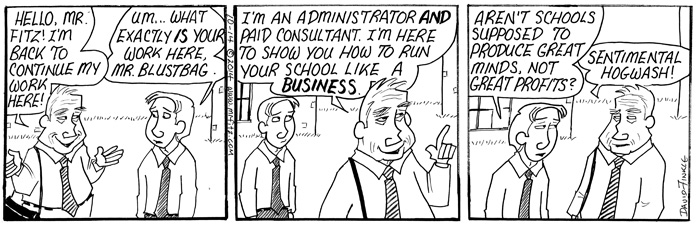 From Will Huntsberry: After weeks of attributing a sudden $30 million deficit to unpredicted budget fluctuations, Sweetwater Union High School District Superintendent Karen Janney admitted at a board meeting Monday night “there were mistakes made.”
Janney specifically acknowledged Sweetwater doesn’t have an integrated position control system. Position control allows various school departments to be able to access the same information about how many people are on staff, how much they are paid, how many positions are unfilled and how many workers are leaving the district. A 2015 audit first obtained by Voice of San Diego indicated Sweetwater should institute position control as soon as possible.
The report also said Sweetwater needed to raise revenue or cut costs in order to remain fiscally solvent. As we’ve reported, the Board of Trustees gave raises and increased central staff instead.
“Our budget situation has been described as serious, significant, challenging, difficult, even a crisis,” said Janney at the meeting. Janney didn’t say how she would describe the problem, but said responsibility for the mistakes rests with her office. https://www.voiceofsandiego.org/topics/news/morning-report-how-sure-you-can-be-on-those-added-soccercity-promises/
How History Class Divides Us

Americans are increasingly polarized and public distrust in government is at record levels. What if the inability of Americans to agree on our shared history—and the right way to teach it—is a cause of our current polarization rather than a symptom?
In September in a room where someone had conspicuously placed a Confederate flag for at least part of the proceedings, the Texas board of education sat through two days of public hearings on a “streamlining” of its 2010 social studies standards.
Panels of teachers had proposed hundreds of changes, but the most controversial was to delete a line of the standard on the Alamoreferencing “all the heroic defenders who gave their lives there.” Swift condemnation from politicians and the public followed, forcing the panels to restore some of that language even before the hearings concluded.
Much has been written about the Alamo’s relative historic importance in the story of the United States, but that wasn’t even the point of this debate. What was truly at stake were the underlying values proponents felt it signaled: What defines American thought and action? What can students take pride in?
It’s easy to lose sight of the connection between what students learn in history and the civic ideals and values those topics communicate, especially since they tend to be treated as different disciplines in K-12 education.
But the Texas debate reminds us that history and civic values are deeply intertwined, and gives rise to this interesting question: What if the inability of Americans to agree on our shared history—and on the right way to teach it—is a cause of our current polarization and political dysfunction, rather than a symptom? It’s a question that gets right to the issues of what constitutes facts, how to interpret them, and how they inform contemporary debates, all of which are key themes as America experiences a kind of civic crisis.
Public trust in the government is near its historic low. And in 2017, Americans were far more politically polarized on topics like immigration and healthcare than in the early 2000s, according to Gallup. Journalists are now routinely assailed by politicians. The bruising confirmation of Brett Kavanaugh to the U.S. Supreme Court led The Washington Post to speculate that even “our least damaged institution” might now be viewed with increasing levels of skepticism.
“If this polyglot country doesn’t have a set of ideals and a broad narrative, we don’t have much of a hope,” said Sam Wineburg, a professor of education and history at Stanford University, whose recent volume attempts to connect the dots between history education and citizenship. “It is not popular to talk about in an era of identity politics, but history teaching in school has a civic purpose, not only a disciplinary purpose…

Most States Require History, But Not Civics (politics not economics)
High school students spend far more time in school learning about America’s history than they do learning about its civic values, according to a 50-state survey by Education Week.
A selection of the survey results are below. For the full state-by-state breakdown, click here. www.edweek.org/ew/projects/how-history-class-divides-us.html?cmp=eml-enl-eu-news1&M=58649777&U=1666178&UUID=1077d6867cfb1e9eaaaa4a81b0c3ab4b
The Second Shift What Teachers Are Doing
to Pay Their Bills

Tracey Tevis 28, single
Coventry Oak Elementary School, Lexington, Ky.
Class: Fourth grade
Salary: $48,000
Years on the job: 5
Second job: Theater manager, Cinemark Fayette Mall
Weekly hours during the school year: 10-15
During the summer: 20-25
Some teachers devote 60 hours a week to the classroom, then go to work elsewhere. The hours can be long, the labor physical, the pay close to minimum wage. Teachers across the country are now baristas, Amazon warehouse employees, movie-theater managers and fast-food grill cooks. They’re entering the gig economy in off hours and struggling to stay awake during school days. Here are some of the things they do, the 16 percent of American teachers who have second jobs, to make ends meet.
Some teachers devote 60 hours a week to the classroom, then go to work elsewhere. The hours can be long, the labor physical, the pay close to minimum wage. Teachers across the country are now baristas, Amazon warehouse employees, movie-theater managers and fast-food grill cooks. They’re entering the gig economy in off hours and struggling to stay awake during school days. Here are some of the things they do, the 16 percent of American teachers who have second jobs, to make ends meet. www.nytimes.com/interactive/2018/09/06/magazine/teachers-america-second-jobs.html?mc=aud_dev&ad-keywords=auddevgate&subid1=TAFI&dclid=CNOkvafVmd4CFfQKfQodKwYJpQ
The International Hot War of the Rich on the Poor
Russia voices alarm at US increasing nukes in military planning
/arc-anglerfish-arc2-prod-mco.s3.amazonaws.com/public/VXUL4AKVKRH6FDFA4YVQZRU6XQ.JPG)
A senior Russian official voiced concerns Monday that Washington is increasing the role of nuclear weapons in its military planning as part of a stepped-up campaign by the Trump administrationto ensure “U.S. military superiority over the rest of the world,” while he also denied U.S. allegations that Moscow has violated an arms treaty.
Andrei Belousov, deputy director of the Foreign Ministry’s Department of Nonproliferation and Arms Control, told the U.N. General Assembly’s disarmament committee that Russia is “especially concerned” at the Trump administration’s Nuclear Posture Review.
The policy review, released in early February, provides for “the creation of low-yield nuclear weapons that would lower the threshold of the use of nuclear weapons,” Belousov said. He said it “also envisages a return to the concept of a ‘limited nuclear war.’”
“In essence, the U.S. military thinking in (the) nuclear field has rolled back a half a century when it was believed that a nuclear war was admissible and could be won,” he told the committee’s session on nuclear weapons.
Belousov said Russia has repeatedly called for “appropriate conditions that would allow us to take practical measures to free the world from nuclear weapons.” But he said Moscow must take into account “the existing strategic realities.”
In addition to beefing up its nuclear arsenal, Belousov said, the U.S. is developing a global ballistic missile defense.
He said the Trump administration is also refusing to abandon the potential deployment of weapons in outer space..www.militarytimes.com/news/your-military/2018/10/23/russia-voices-alarm-at-us-increasing-nukes-in-military-planning/?utm_source=Sailthru&utm_medium=email&utm_campaign=ebb-10-24&utm_term=Editorial%20-%20Military%20-%20Early%20Bird%20Brief
How to Avoid an Avoidable War
Ten Questions About the New U.S. China Strategy
This November, we will commemorate the 100th anniversary of the end of what was called “the war to end all wars” between the great powers of the early twentieth century. Of course, the war to end all wars turned out to be anything but. Because of a catastrophic series of unintended consequences, more wars followed in its wake, and the geopolitical map of the world has been redrawn three times since then.
When future generations look back on 2018, it could well be as the year in which the relationship between the two great powers of the twenty-first century—the United States and China—shifted from peaceful coexistence to a new form of confrontation, although its final trajectory remains far from certain.
In a speech at the Hudson Institute earlier this month, U.S. Vice President Mike Pence accused China of unfair trade practices, intellectual property theft, increasing military aggression, and interference in the United States’ domestic politics. The vice president’s speech is the latest in a long line of authoritative statements and policies from the Trump administration redefining future U.S. strategy toward China. These include the U.S. National Security Strategy published last December, January’s new U.S. Defense Strategy, last month’s Department of Defense report on the future of U.S. defense manufacturing and, of course, the initiation of the trade war with China in June.
This series of doctrinal statements by the United States has formally declared an end to a 40-year period of U.S. strategic engagement with China, and its replacement with a new period of strategic competition. All rest on the assumption that engagement has failed; that China’s domestic market has not opened up sufficiently to foreign export and investment penetration; that, rather than becoming a responsible stakeholder in the global rules-based order, China is now developing an alternative international order with Chinese characteristics; and that instead of becoming more democratic in its domestic politics, Beijing has now decided to double down as a Leninist state.
Washington’s decision to push back against Chinese foreign policy and economic strategy is an inevitable structural response to the fact that China’s aggregate military and economic power has now begun to challenge U.S. global dominance. This radically new approach to U.S. declaratory policy toward China also appears to have attracted widespread support across U.S. government agencies, from the U.S. Congress, and from a wide cross-section of U.S. businesses. But as U.S. strategists think through its operational implications, they will need to anticipate and deal with a number of potential unintended consequences—including the possibility of a rapid escalation from strategic competition to decoupling to confrontation, containment, and, perhaps, ultimately, to armed conflict.
TEN QUESTIONS ABOUT STRATEGIC COMPETITION
The United States and its partners and allies around the world will need to consider a number of critical questions as Washington undertakes the translation of this fundamental change in declaratory strategy into operational policy. First, what is the United States’ desired endpoint? What does the United States do if China does not acquiesce to the demands outlined in the vice president’s speech—including a “fair and reciprocal” trade deal, and ends to “the theft of American intellectual property” and “the predatory practice of forced technology transfer”—but instead explicitly rejects them? https://www.foreignaffairs.com/articles/china/2018-10-22/how-avoid-avoidable-war?cid=nlc-fa_twofa-20181025
The Tragedy of Saudi Arabia’s War
Amal Hussain, 7, is wasting away from hunger. The Saudi-led war in Yemen has pushed millions to the brink of starvation.

It wasn’t for a lack of food in the area: The stores outside the hospital gate were filled with goods and the markets were bustling. But Mr. Hajaji couldn’t afford any of it because prices were rising too fast.
“I can barely buy a piece of stale bread,” he said. “That’s why my children are dying before my eyes.”
The devastating war in Yemen has gotten more attention recently as outrage over the killing of a Saudi dissident in Istanbul has turned a spotlight on Saudi actions elsewhere. The harshest criticism of the Saudi-led war has focused on the airstrikes that have killed thousands of civilians at weddings, funerals and on school buses, aided by American-supplied bombs and intelligence.
But aid experts and United Nations officials say a more insidious form of warfare is also being waged in Yemen, an economic war that is exacting a far greater toll on civilians and now risks tipping the country into a famine of catastrophic proportions.
Under the leadership of Crown Prince Mohammed bin Salman, the Saudi-led coalition and its Yemeni allies have imposed a raft of punitive economic measures aimed at undercutting the Houthi rebels who control northern Yemen. But these actions — including periodic blockades, stringent import restrictions and withholding the salaries of about a million civil servants — have landed on the backs of civilians, laying the economy to waste and driving millions deeper into poverty.
Those measures have inflicted a slow-burn toll: infrastructure destroyed, jobs lost, a weakening currency and soaring prices. But in recent weeks the economic collapse has gathered pace at alarming speed, causing top United Nations officials to revise their predictions of famine.
“There is now a clear and present danger of an imminent and great, big famine engulfing Yemen,” www.nytimes.com/interactive/2018/10/26/world/middleeast/saudi-arabia-war-yemen.html?action=click&module=Top%20Stories&pgtype=Homepage
For Over a Decade, This Base Has Housed American Soldiers Rotating Through Afghanistan
The transformation of Camp Dwyer in Helmand Province reflects the shifting strategy for troops fighting in Afghanistan, where on Oct 4. the 2,414th American was killed.

At War is a newsletter about the experiences and costs of war with stories from Times reporters and outside voices. AFTER 18 years of demands for a “War Section” this is finally it!!!
Specialist James A. Slape died in southern Afghanistan on Oct. 4, three days before the 17th anniversary of the start of the war there. He was 23 years old when he stepped on a roadside bomb in a stretch of desert that turned to green shrub and stray trees as it approached the Helmand River.
Slape was a bomb-disposal technician with the North Carolina National Guard, assigned to an infantry company that had drawn the task of protecting an installation called Camp Dwyer in Helmand. The base had been there for more than a decade. It was cut into the sand with barbed wire and guard towers in 2007 as a British firebase. The war was six years old then, and Slape was 12. The base was named after a British soldier: Lance Bombardier James Dwyer, who was 22 years old, a year shy of Slape’s age, when his vehicle ran over a mine two days after Christmas in 2006.
In 2008, the base had rudimentary showers and a small cross made of artillery shells in its center. At the bottom was a wreath of plastic poppies and a plaque that said, “Memory of the Fallen.” The British burned feces at Dwyer at the time and ate their food in a small tent next to a fryer, a grill and a stove called Hell Man’s Kitchen. Half-dressed British soldiers sat idly next to their howitzers, smoking until they had to fire the 105-millimeter gun.
The base was built when British forces were fighting a resurgent Taliban that had slowly reformed in the years after the initial American invasion in 2001. The American military had not yet committed to the volatile province. It was a bloody campaign, and Dwyer was a small outpost. It wasn’t until the spring of 2008 that United States Marines started to show up in force. Before this, American Army units visited only sporadically for brief missions. With a few tents, most American Marines and soldiers would sleep outside. Some armored vehicles couldn’t fit inside the perimeter. They were the first of what would turn into the next iteration of the Afghan strategy, in which tens of thousands of American troops spread across the country, building small outposts and expanding the ones that already existed.
In 2009, Dwyer grew, and the Marines started a spat of offensives. The base changed from Forward Operating Base Dwyer to Camp Dwyer. Engineers plowed the dirt and paved a new airfield. Troops bled and died in the surrounding farmland. By 2010, the number of American service members in Afghanistan climbed toward 100,000; a few laps around Camp Dwyer’s perimeter could easily equal 10 miles. There were two mess halls staffed by foreign contractors, a phone center with computers and a trailer where soldiers, sailors, Marines and airmen could use phone cards to call home. A line of medical evacuation helicopters sat on Dwyer’s tarmac. There white and red crosses silhouetted on their black airframes. www.nytimes.com/2018/10/26/magazine/camp-dwyer-afghanistan-soldiers.html?action=click&module=Briefings&pgtype=Homepage
Days Later, Pentagon Says U.S. General Among Wounded In Kandahar Attack
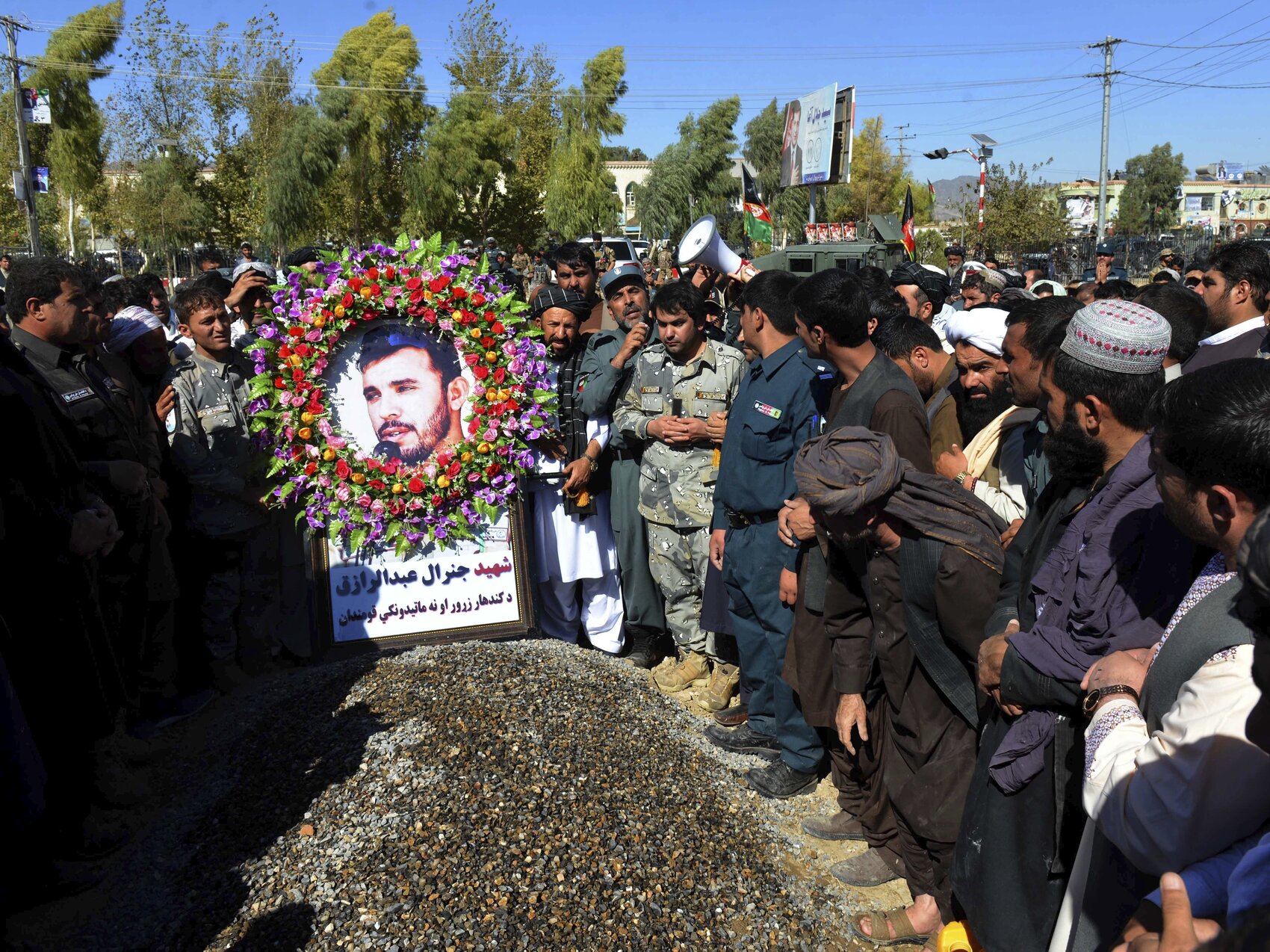
The U.S. military command in Afghanistan has acknowledged that an American general was wounded during a deadly insider attack in the southern city of Kandahar last week. Initially, the command described him only as an “American service member.”
On Thursday, Army Brig. Gen. Jeffrey Smiley was in a meeting at the Kandahar governor’s compound with senior American and Afghan officials. Just before the meeting broke up, an Afghan guard suddenly turned his weapon on those present.
The guard shot Kandahar’s police chief, Gen. Abdul Raziq, serveral times, killing him. Then he sprayed the room with bullets. Smiley was hit twice in his limbs, said a Pentagon source, and is being treated at a military hospital in Afghanistan.
Cmdr. Grant Neeley, an American military spokesman in Kabul, confirmed to NPR that Smiley was shot but said there would be no other details at this time, adding, “We will provide updates when appropriate.”
News that Smiley was wounded was first reported by The Washington Post. The American command said it did not release the general’s name because of what it called privacy concerns. The general is in charge of training and advising the Afghan security forces in Kandahar. www.npr.org/2018/10/22/659603915/days-later-pentagon-says-u-s-general-among-wounded-in-kandahar-attack
Inside the remote U.S. base in Syria central to combating ISIS and countering Iran

The roads are unpaved. Many of the buildings still standing are riddled with bullet holes. But this secretive U.S. base, located near Syria’s eastern border with Jordan and visited by journalists for the first time Monday, is now seen as a crucial bulwark against Iran.
The Al Tanf garrison was established to help local forces eliminate the Islamic State terror group. But with the Islamic State in decline and on the run, the base is now playing a critical role in the American effort to diminish Iran’s influence in the region.
NBC News joined Army Gen. Joseph Votel, the top U.S. commander for the Middle East, on a trip to Al Tanf where he acknowledged the base’s strategic importance in countering the sway of Iran.
“We don’t have a counter Iranian mission here. We have a defeat ISIS mission,” Votel said Monday. “But I do recognize that our presence, our development of partners and relationships down here does have an indirect effect on some malign activities that Iran and their various proxies and surrogates would like to pursue down here.”

The American forces use the remote outpost to train Syrian opposition fighters known as Maghawir al Thawra, or MaT, formerly the Free Syrian Army.
The MaT has roughly 300 soldiers working out of Al Tanf, conducting patrols in the region outside the base’s walls as part of the effort to drive out ISIS. The territory is home to roughly 100,000 people including Bedouins and refugees living in the Rukban camp.
The base is located along a critical road that stretches from Tehran to Baghdad to Damascus. Known as the Baghdad Damascus Highway, it was once a busy thoroughfare for smugglers transporting both legal and illegal goods, including weapons.
The area that now houses the base sustained major damage when it was under Islamic State control.
But since 2015, the base has served as a key outpost in the fight against ISIS. U.S. forces, with the aid of Syrian opposition fighters, have driven ISIS out of an area that stretches roughly 35 miles from the Jordanian border in what is known as a “deconfliction zone.”
“What we’ve been able to do is ensure that this area, the deconfliction zone that we have around Al Tanf, does not support freedom of movement for ISIS,” Votel said.

Al Tanf’s location is also central to its role in preventing the Iranians from gaining a firmer foothold in the region.
The base sits in the heart of what Iran hopes will be part of a “Shia Crescent,” a continuous land bridge linking Iran through Iraq and Syria to Lebanon. www.nbcnews.com/news/military/inside-remote-u-s-base-syria-central-combating-isis-countering-n922991?utm_source=Sailthru&utm_medium=email&utm_campaign=ebb%2025.10.18&utm_term=Editorial%20-%20Military%20-%20Early%20Bird%20Brief
Military work is a lightning rod in Silicon Valley, but Microsoft will sell the Pentagon all the AI it needs

- Microsoft announced Friday that it plans to sell artificial intelligence technologies to the military.
- The military is looking into using more artificial intelligence for its defense, as the Chinese government has set goals in surpassing the U.S. military.
- In Silicon Valley, whether tech companies should become involved in projects with the military and federal law enforcement has flared up controversy among employees.
Marine F-35s Grounded Again As Yet Another Frickin’ Thing Needs To Be Replaced

The trouble continues for the F-35 Joint Strike Fighter, the aircraft with more bugs than Klendathu.
- A “couple dozen” Marine Corps F-35Bs were grounded to repair two fuel tubes, Defense News and Marine Corps Times first reported on Thursday, the second time so far this month.
- On Oct. 11, the Pentagon’s Joint Program Office that oversees the F-35 ordered all of the planes to suspend flight operations in order to replace a different fuel tube that was identified as a problem as part of an ongoing investigation into the Sept. 28 crash of an F-35B in South Carolina.
- An analysis of the F-35’s engine determined that the two other fuel tubes needed to be replaced even though they had not failed, said JPO spokesman Joe DellaVedova, adding that the repairs “can be completed on the flight line by line maintainers.”
- “When a part is available, we anticipate replacements can be completed in less than 48 hours,” DellaVedova told Task & Purpose on Thursday. “Parts are in the supply line and Pratt & Whitney is working to expeditiously further ramp up supply. The exact number of engines that may require replacement fuel tubes speaks to operational security and readiness status of the fleet, and will not be released by the JPO.” taskandpurpose.com/marine-f-35s-grounded-again/?bsft_eid=6bf83495-323c-4e87-a849-2a6f864fd212&bsft_pid=0468cc6b-f3e1-4657-abe0-0c35f1b76746&utm_campaign=tp_daily_thursday_pm&utm_source=blueshift&utm_medium=email&utm_content=tp_daily_pm_ricks&bsft_clkid=fd76de2c-6c75-4e1b-8532-edb2d0bf9c40&bsft_uid=7c674a6c-ae11-4ec4-84f1-aef0c34e44e5&bsft_mid=56f69bd6-cf57-4570-bc46-05bc035a980a&bsft_pp=2
The International Economic War of the Rich on the Poor

Signs of Economic Trouble We Shouldn’t Ignore

To the Editor:
Re “Worries Add Up as Stocks Plunge” (front page, Oct. 25):
The stock market is now starting to reflect what has been true for some time but few want to acknowledge. The “surging economy, low interest rates and fast-growing corporate profits” are no longer operative, and they never really were all they were cracked up to be. Profits continue to rise for some, but mainly because of cost-cutting, new technologies and reductions in labor. Profits resulting from such reductions and “efficiencies” do not necessarily bode well for a growing economy or a rising stock market.
Then there are the realities of Main Street, reflected by a growing number of retail store closures and softness in the real estate market. Just walk the streets of New York. There are retail stores for rent on almost every block.
We have seen a surge in consumer buying over the past few years, but it was mainly a function of easy credit, low interest rates, and endless sales and discounts. However, the days of easy credit and low-cost borrowing are over for both consumers and developers. With interest rates rising and consumers already overextended, we are very likely to see a slowing or reduction in spending.
On top of all this, business is now beginning to feel the effects of the Trump tariffs and trade wars. The cost of raw materials and other goods on which producers rely are on the rise.
With political discontent at home and abroad, Washington polarized, midterm elections approaching and destabilizing events around the world (such as the Khashoggi assassination), is it any surprise that the stock market is roiling?
We are without doubt in for a major correction, one that may last for a very long time. It is impossible to time the correction. But it is inevitable if history and recent events are any judge, and the signs are there now for all to see.
Jeffrey R. Zuckerman
New York
Detroit grapples with ‘devastating’ impact of black male homicides

Lorease Mumford believed as a mother, she had done everything right.
She moved her family from Detroit to a safer suburban neighborhood, sent her son to private school at the University of Detroit Jesuit and, above all, she instilled in him the difference between right and wrong.
But all of Mumford’s safekeeping and parenting weren’t enough to save her son, Steven Hill, from a violent ending nearly two years ago.
Hill, 26, was shot to death Dec. 1, 2016, not far from her former job at Sinai Grace Hospital and his grandparents’ home on Detroit’s northwest side.
He was approached by two men and shot outside a home in the 17000 block of Snowden shortly after leaving his grandparents’ home.
As a certified surgical technologist, Mumford often witnessed the grief of mothers and fathers who lost their children to violence.
“I never thought I would be one of those parents,” she said. “Never, never, ever.”
Mumford is still reeling from the loss of her only son, whose killing remains unsolved. She is not alone.
African-Americans die from homicide at much higher rates than other racial groups, especially in Michigan and its largest city, Detroit, and black men are especially at risk.
The toll on African-American males in the city is relentless, as evidenced by the shooting of three young men, all in their 20s, in the lobby of a White Castle restaurant on Detroit’s west side last month.
DeShawn Gadson, 20; Trevaughn Anthony, 24; and Rashawn Harrington, 25. were slain about 12:25 a.m. Sept. 9 inside the restaurant on the 6300 block of West Warren, just west of Livernois, police said.
According to FBI data analyzed this year by the Washington-based Violence Policy Center, there were 7,014 black homicide victims in the United States in 2015. That translates to a homicide rate of 18.68 per 100,000 people among African Americans, compared with an overall rate of 4.62 per 100,000.
Of those 7,014 victims, 88 percent were male. Michigan had the nation’s sixth highest rate of black homicide, according to the center’s report: 27.04 per 100,000. Of the 388 victims, 345 — 89 percent — were male.
In Detroit, of 312 homicide victims in 2016, 279 were African American; 246 of those black victims — 88 percent — were male, according to figures from the Wayne County Medical Examiner’s Office. While Detroit’s rate of black male homicide is high — 97 per 100,000 — it trails that of Chicago, where the rate is 120 per 100,000.
And for younger African-American males, the numbers are even more startling. As of Aug. 1, 64 African-American men between the ages of 18-35 had lost their lives to gunfire in Detroit, out of 175 homicides in the first seven months of this year, according to figures from the Detroit Police Department.
During all of last year, 107 African-American males in the same age group were killed by gunfire in Detroit, out of 267 total homicides, and in the first seven months of 2016, 133 young black men were shot to death. www.detroitnews.com/story/news/local/detroit-city/2018/10/21/detroit-dealing-devastating-impact-black-male-homicides/808535002/
How Google Protected Andy Rubin, the ‘Father of Android’

The internet giant paid Mr. Rubin $90 million and praised him, while keeping silent about a misconduct claim.
Google gave Andy Rubin, the creator of Android mobile software, a hero’s farewell when he left the company in October 2014.
“I want to wish Andy all the best with what’s next,” Larry Page, Google’s chief executive then, said in a public statement. “With Android he created something truly remarkable — with a billion-plus happy users.”
What Google did not make public was that an employee had accused Mr. Rubin of sexual misconduct. The woman, with whom Mr. Rubin had been having an extramarital relationship, said he coerced her into performing oral sex in a hotel room in 2013, according to two company executives with knowledge of the episode. Google investigated and concluded her claim was credible, said the people, who spoke on the condition that they not be named, citing confidentiality agreements. Mr. Rubin was notified, they said, and Mr. Page asked for his resignation.
Google could have fired Mr. Rubin and paid him little to nothing on the way out. Instead, the company handed him a $90 million exit package, paid in installments of about $2 million a month for four years, said two people with knowledge of the terms. The last payment is scheduled for next month. www.nytimes.com/2018/10/25/technology/google-sexual-harassment-andy-rubin.html?action=click&module=Top%20Stories&pgtype=Homepage
The Emergence of Fascism as a Popular Mass Movement and The War on Reason
With no structural analysis, Famed (plagiarist) liberal historian believes Trump is leading America to fascism

Historian Doris Kearns Goodwin agrees President Donald Trump is leading the United States down the road to fascism — but she doesn’t like to use that particular word.
The historian and author believes the word is too strong and loaded with negative associations to persuade Americans to reject Trump and his abuses, but MSNBC’s Mika Brzenzinski challenged her to call out what she see clearly sees.
“Does this look like United States presidential leadership or would you argue, like Madeleine Albright does, that we are leading down a very different path here,” Brzezinski said, “and all the pieces are fitting together towards someone that is trying to make this a dictatorship?”
Goodwin did not disagree, but she recoils at using such loaded terminology to describe a U.S. leader.
…The historian and author believes the word is too strong and loaded with negative associations to persuade Americans to reject Trump and his abuses, but MSNBC’s Mika Brzenzinski challenged her to call out what she see clearly sees.
“Does this look like United States presidential leadership or would you argue, like Madeleine Albright does, that we are leading down a very different path here,” Brzezinski said, “and all the pieces are fitting together towards someone that is trying to make this a dictatorship?”https://www.salon.com/2018/10/19/famed-historian-believes-trump-is-leading-america-to-fascism_partner/
Messianic Seminarian The Rule of the Uber-Rich Means Tyranny or Revolution
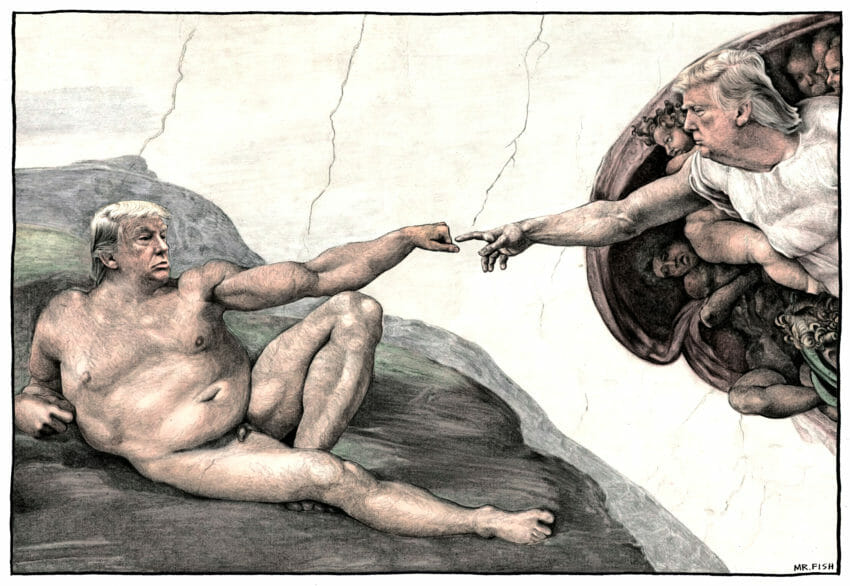
At the age of 10 I was sent as a scholarship student to a boarding school for the uber-rich in Massachusetts. I lived among the wealthiest Americans for the next eight years. I listened to their prejudices and saw their cloying sense of entitlement. They insisted they were privileged and wealthy because they were smarter and more talented. They had a sneering disdain for those ranked below them in material and social status, even the merely rich. Most of the uber-rich lacked the capacity for empathy and compassion. They formed elite cliques that hazed, bullied and taunted any nonconformist who defied or did not fit into their self-adulatory universe.
It was impossible to build a friendship with most of the sons of the uber-rich. Friendship for them was defined by “what’s in it for me?” They were surrounded from the moment they came out of the womb by people catering to their desires and needs. They were incapable of reaching out to others in distress—whatever petty whim or problem they had at the moment dominated their universe and took precedence over the suffering of others, even those within their own families. They knew only how to take. They could not give. They were deformed and deeply unhappy people in the grip of an unquenchable narcissism.
It is essential to understand the pathologies of the uber-rich. They have seized total political power. These pathologies inform Donald Trump, his children, the Brett Kavanaughs, and the billionaires who run his administration. The uber-rich cannot see the world from anyone’s perspective but their own. People around them, including the women whom entitled men prey upon, are objects designed to gratify momentary lusts or be manipulated. The uber-rich are almost always amoral. Right. Wrong. Truth. Lies. Justice. Injustice. These concepts are beyond them. Whatever benefits or pleases them is good. What does not must be destroyed. www.truthdig.com/articles/the-rule-of-the-uber-rich-means-tyranny-or-revolution/
More Americans Supported Hitler Than You May Think. Here’s Why One Expert Thinks That History Isn’t Better Known
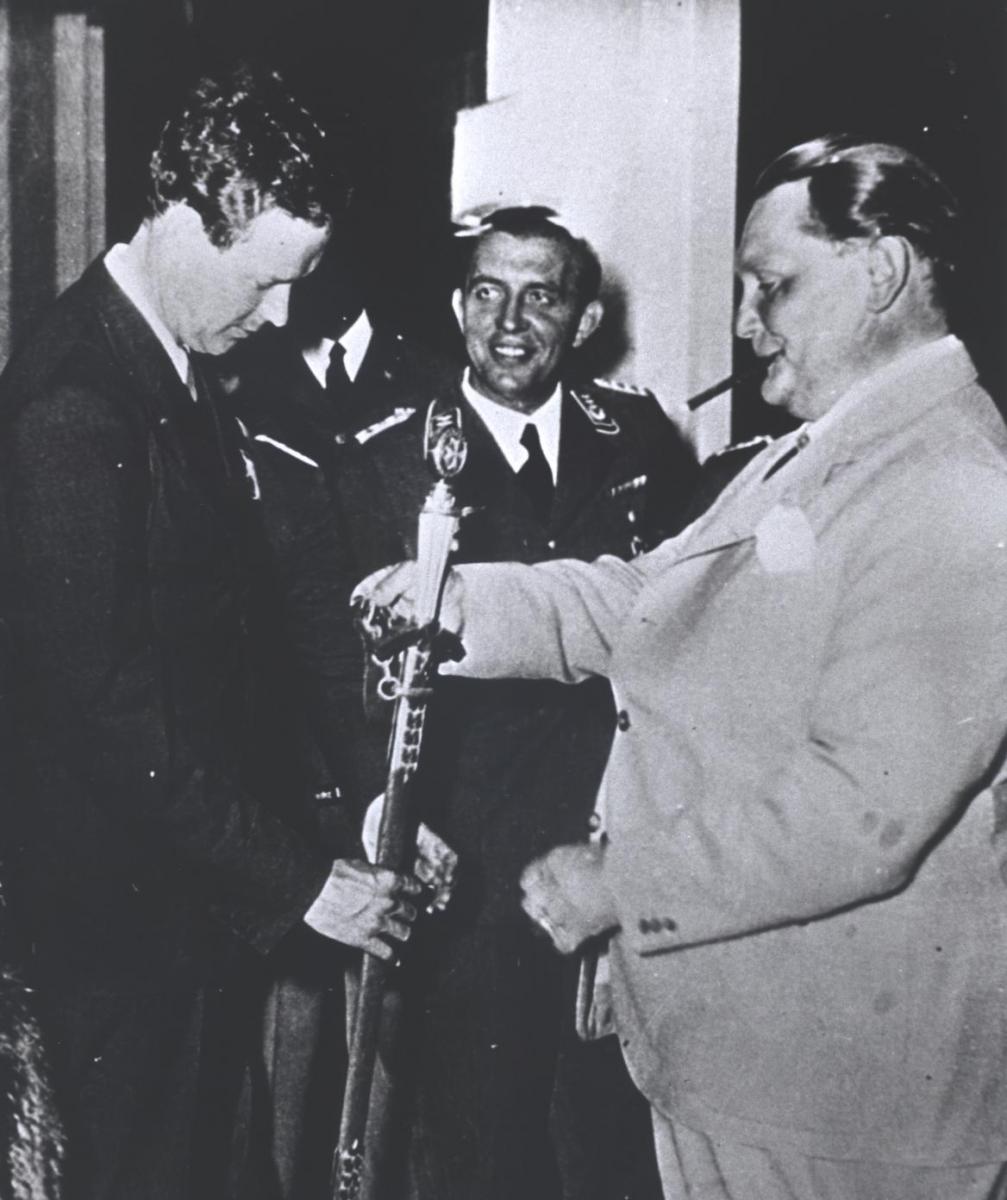
These days, and especially since the deadly rally in Charlottesville, Va., last August, it has become clear to many Americans that the specter of Nazism in their country is not resigned to 1930s history. But until very recently, even that part of the story was less well known than it is today.
In fact, when Bradley W. Hart first started researching the history of Nazi sympathy in the United States a few years ago, he was largely driven by the absence of attention to the topic. Hart’s new book Hitler’s American Friends: The Third Reich’s Supporters in the United States argues that the threat of Nazism in the United States before World War II was greater than we generally remember today, and that those forces offer valuable lessons decades later — and not just because part of that story is the history of the “America First” idea, born of pre-WWII isolationism and later reborn as a slogan for now-President Donald Trump.

Coughlin’s Shrine of the Little Flower (St Theresa, patron saint of Nazis) in Royal Oak Mich.
Pentagon To Order More Troops To Border After Trump Vows To Use Military To Halt Migrant Caravan

The Pentagon is sending 800 or more additional troops to the Southwest border in response to President Donald Trump’s vow to use the military to block a caravan of Central American immigrants from entering the United States, a U.S. official said.
Defense Secretary James N. Mattis is expected to sign an order Thursday dispatching the troops. They will be limited to providing logistical support to the Border Patrol, which will remain responsible for apprehending anyone crossing the border illegally, the official said.
Trump said in a tweet Thursday that he was “bringing out the military” to secure the border, calling it a “national emergency.” taskandpurpose.com/pentagon-troops-border-trump-caravan/?bsft_eid=82d2fc1f-222d-4617-94cc-5d2c46849037&bsft_pid=638c1e5f-5d73-4568-9c51-66cdf2669e5b&utm_campaign=tp_daily_friday_pm&utm_source=blueshift&utm_medium=email&utm_content=tp_daily_pm_ricks&bsft_clkid=e7a713b4-ff6d-4f33-baf4-906d57760298&bsft_uid=7c674a6c-ae11-4ec4-84f1-aef0c34e44e5&bsft_mid=47f66e6e-22e0-45bb-8632-e1c94b3ed9c6&bsft_pp=8
Saudi Arabia doesn’t deserve the benefit of the doubt, least of all from the president
The Trump administration continues to send disturbingly mixed signals about whether it will hold Saudi Arabia’s rulers accountable if it’s proved that they’re responsible for the murder of dissident journalist Jamal Khashoggi.
It has been two weeks since the Washington Post contributor and Virginia resident, a critic of the current Saudi leadership, entered the Saudi consulate in Istanbul to obtain paperwork he needed for his marriage. He was never seen again. According to Turkish officials, audio recordings show that Khashoggi was interrogated, tortured and killed by Saudi intelligence officers inside the consulate. The officials add that his body was cut up with a bone saw and removed from the building. On Wednesday, the New York Times, citing a recording described by a Turkish official, reported further that Khashoggi’ s fingers were severed before he was beheaded and dismembered.
It also reported that one of the men identified by Turkish officials in Khashoggi’s disappearance was a frequent companion of Crown Prince Mohammed bin Salman, Saudi Arabia’s de facto leader, and that three others are linked by witnesses and other records to the crown prince’s security detail. The crown prince has denied any knowledge of what took place at the Istanbul consulate, a denial relayed by Trump on Twitter.
In an interview with the Associated Press, Trump suggested that the Saudi rulers were being judged “guilty until proven innocent” — just like Supreme Court Justice Brett Kavanaugh! www.latimes.com/opinion/editorials/la-ed-trump-saudis-20181018-story.html
11 Killed in Pittsburgh Synagogue Shooting; Gunman Yelled ‘All Jews Must Die’

Shooting at Pittsburgh synagogue takes place during Shabbat service ■ Shooter in custody, identified as far-right white supremacist ■ Three cops shot ■ Trump: Attack could have been avoided ‘if they had protection’
Robert Bowers, a 46-year-old white male who expressed far-right and white supremacist views on his social media accounts, was arrested over the attack and was reportedly hospitalized in fair condition with gunshot wounds. Eyewitness reports said he was heavily armed.
Two hours before the attack, an account on the social network Gab under Bowers’ name posted an attack on HIAS, a Jewish-American organization that helps refugees in the U.S. and around the world.

www.haaretz.com/us-news/man-reportedly-opens-fire-near-a-pittsburgh-synagoue-1.6595493

How suspected fascist mail bomber Cesar Sayoc got caught
Short of turning himself in, suspected mail bomber Cesar Altieri Sayoc Jr. could not have done more to get caught.
The clues that investigators followed to his gaudy white van in Plantation reveal that he either ignored or failed to consider all of the ways he was laying a trail for them.
He left a fingerprint on one of the packages he is accused of sending. His DNA was found on two of the bombs. By itself, that was enough to put feds on his trail, and everything else fell together quickly from there.
Here’s how investigators were able to find their man — one person in a population of 327 million — in a scant five days after the pipe bombs began showing up.
The packages
The first suspected package turned up Monday, addressed to George Soros, a billionaire philanthropist who has supported Democrats. It was intercepted, but the number of packages grew on Tuesday. One to Barack Obama. One to Hillary Clinton. Another to former CIA Director John Brennan.
All targeted prominent Democrats, and all bore a return address to South Florida congresswoman Debbie Wasserman Schultz, former head of the Democratic National Committee and a frequent target of conservatives.
Immediately South Florida was at the center of the investigation.
Another package intended for former U.S. Attorney General Eric Holder was misaddressed and was shipped to Wasserman Schultz’s office as the return address. By the end of the day Wednesday, the number of pipe bombs came to five, and the number ultimately climbed to at least 14.
All of the bombs were nearly identical. www.sun-sentinel.com/news/florida/fl-ne-how-mail-bomb-suspect-cesar-sayoc-was-caught-20181027-story.html
Here Is a List of Far-Right Attackers Trump Inspired. Cesar Sayoc Wasn’t the First — and Won’t Be the Last.

Update: October 27, 2018, 4:30 p.m. EDT
Minutes after this story was published, news reports confirmed that multiple people at a synagogue in Pittsburgh had been killed by a gunman. The gunman taken into custody has been linked to anti-Jewish and anti-immigrant posts on social media. At least 11 people were killed and six injured at the Tree of Life synagogue. theintercept.com/2018/10/27/here-is-a-list-of-far-right-attackers-trump-inspired-cesar-sayoc-wasnt-the-first-and-wont-be-the-last/?fbclid=IwAR2gfsRdgMEVIA2zYqBtHUXsgt5BqwCK0SF3arL_R6VF26v9mHcpVzwlX6s
Maine Governor Paul LePage criticised for ‘racist’ remarks
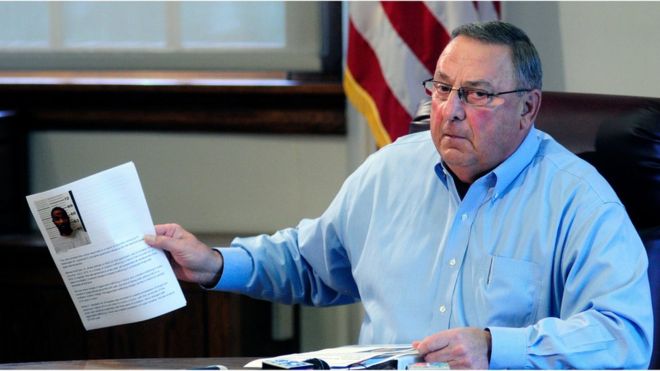
The governor of Maine has said that people of colour were enemies of his state, and appeared to suggest they should be shot.
Speaking about Maine’s effort to combat drug crime, Paul LePage said that “the enemy right now… are people of colour or people of Hispanic origin”.
“When you go to war… and the enemy dresses in red and you dress in blue, then you shoot at red,” he said.
Leading Democrats have urged him to resign.
Mr LePage made the comments while seeking to clarify remarks he made earlier in the week which were criticised as racist.
WEDNESDAY
Mr LePage was asked about a statement he made in January, in which he blamed the state’s heroin problem on “guys by the name D-Money, Smoothie, Shifty” who “come from Connecticut and New York”.
“They come up here, they sell their heroin, then they go back home. Incidentally, half the time they impregnate a young, white girl before they leave,” he said.
Speaking on Wednesday, he denied it was racist, but said that since January he had been putting together a binder cataloguing drug arrests in the state, and that “90-plus per cent of those pictures in my book, and it’s a three-ringed binder, are black and Hispanic people”. www.bbc.com/news/world-us-canada-37204837?SThisFB&fbclid=IwAR0LbQTt36AYgqYKnqETg4MkjEN6IznL17ZuZIeaZHt-BRt5VzIdWv6hYSU
Obamagogue in Detroit: Vote because ‘character of our country is on ballot’ (even if Detroit is still in ruins after 8 years of me)
Barack Obama on Friday urged Michigan Democrats and others to vote on Nov. 6, arguing that “The character of our country is on the ballot.”
Obama addressed an overflow rally at Cass Tech High School in Detroit, where turnout in the mid-term election could be a critical factor for Democratic candidates like gubernatorial nominee Gretchen Whitmer and U.S. Sen. Debbie Stabenow.
“The main reason I’m here is to make sure that all of you vote in what I believe might be the most important election of our lifetime,” he said to applause.
Michigan Democrats traditionally struggle to turn out voters in non-presidential election years, particularly in urban areas like Detroit. Beyond Whitmer’s running mate Garlin Gilchrist II, Democrats are offering a predominately white statewide ticket to voters in the majority African-American city. https://www.detroitnews.com/story/news/local/detroit-city/2018/10/26/obama-whitmer-democrats-detroit-rally/1764712002/
Solidarity for Never
Cabin for retired leader rises as feds question UAW spending

Public records, blueprints and interviews offer insight into how UAW leaders spent money amid a widening corruption scandal.
A United Auto Workers nonprofit is building a custom-made, lakefront cottage for retired President Dennis Williams as FBI agents question union leaders’ spending of membership dues and money from Detroit’s automakers on personal luxuries.
Public records, blueprints and interviews offer insight into how UAW leaders spent money amid a widening corruption scandal that is expected to lead to additional criminal charges. One previously undisclosed expense is the Williams cottage under construction at the UAW Black Lake Conference Center, a 1,000-acre retreat in northern Michigan financed with interest from the union’s $721 million strike fund, which is bankrolled by worker dues.
The UAW’s nonprofit real-estate arm Union Building Corp. started building a three-bedroom, three-and-a-half bath, 1,885-square-foot cottage for Williams this year on the shores of Black Lake in Onaway, a half-hour drive south of Cheboygan. The cost of the cottage was unclear but the initial estimate was $285,000, a cost that likely increased due to labor costs.
Williams retired in June and was implicated in the scandal one month later when prosecutors said he directed subordinates to use funds from Detroit’s automakers, funneled through training centers, to pay for union travel, meals and entertainment.
The Williams cottage, featuring granite counters, stainless-steel appliances, a wood-burning fireplace, a wine cooler and a patio overlooking Black Lake, was under construction Monday, and workers were spotted on the lakefront property.
Williams, 65, whose Michigan driver’s license lists the Black Lake resort as his home address, could not be reached for comment. He has not been charged with wrongdoing during the ongoing investigation.
Cabins at Black Lake have been provided for generations of former UAW presidents, but the Williams cottage is the first one being built during a federal investigation into union spending.
“This is absolutely ridiculous, it’s a dereliction of duty and a complete misappropriation of member dues,” said autoworker Terry Bowman, 53…
The timing of the cottage construction and appearance send a bad message to rank-and-file UAW workers, said Peter Henning, a Wayne State University law professor and former federal prosecutor.
“This doesn’t help the view that the leadership has feathered its own nest over advancing the cause of the members,” Henning said.
The Williams cottage is a contrast to the rustic lodging available to rent at the 241-room resort.
Opened in 1970, the center features a campground, gym, Olympic-size pool and an adjacent golf course. The ashes of former UAW President Walter Reuther and wife May were scattered on the center’s grounds after the couple was killed in an airplane crash nearby.

The cabin construction started after the union faced a serious budget crunch in 2014.
In response, members approved the first hike in membership dues in almost 50 years. The increase generated more money for the UAW strike fund, which bankrolls the union’s resort in Black Lake.
Simultaneously, prosecutors and former UAW official Nancy Adams Johnson say Williams directed subordinates to save money by having Detroit’s automakers pick up entertainment, travel and meal expenses incurred by “senior UAW officials, their friends, family and allies.”
Once members started paying higher union dues, a UAW subsidiary started acquiring new boats. www.detroitnews.com/story/business/autos/chrysler/2018/10/26/cabin-retired-leader-rises-feds-question-uaw-spending/1512997002/
Union Report Exclusive: Internal Report Shows NEA Losses of 17,000 Members and 87,000 Fee Payers Since Janus Decision
The National Education Association is feeling the first effects of the U.S. Supreme Court’s Janus ruling, which ended the practice of public-sector unions charging fees to nonmembers. New membership numbers obtained by Union Report show that NEA now stands at 3,001,570 total members — a decline of 17,000 since the last report in April. This erased much of the membership increase the union saw in 2017.
More damaging to the union’s coffers is the loss of its more than 87,000 former agency fee payers nationwide after the court’s ruling. The percentage losses are comparable to those of the Maryland State Education Association, reported here two weeks ago.
EA already cut its budget in anticipation of these losses, but it is looking for additional ways to reduce expenditures. The first proposal is to cut the number of days at its annual convention by two, saving $1 million. The Representative Assembly itself, where the union’s delegates debate and vote on policies, endorsements, and the budget, would continue to last four days; some pre-RA activities, which previously ran for about a week, would be eliminated or consolidated.
The open hearing on the union’s strategic plan and budget, previously conducted in person the day before the RA opened, would be converted to a virtual meeting. www.the74million.org/article/union-report-exclusive-internal-report-shows-nea-losses-of-17000-members-and-87000-fee-payers-since-janus-decision/?utm_source=The+74+Million+Newsletter&utm_campaign=bd103fc297-EMAIL_CAMPAIGN_2018_10_24_09_21&utm_medium=email&utm_term=0_077b986842-bd103fc297-176109065
Spy versus Spy
Gina Haspel CIA Torture Cables’ Dates and Times Declassified

FOIA Lawsuit Wins Chronology of Black Site Waterboarding Supervised by Future CIA Director
The National Security Archive’s Freedom of Information lawsuit against the CIA has won release of the previously censored dates and times on cables sent by future CIA director Gina Haspel when she commanded a CIA black site in Thailand in 2002 where interrogators tortured and waterboarded an al-Qaeda suspect, according to the new documents posted on the Archive’s Web site today.
The new versions of the Haspel cables now provide a detailed chronology of the CIA torture, which began on “Day One” of the suspect’s confinement at the site, November 15, 2002, and continued even after his removal to a different black site, in Poland, on December 4, 2002. The torture included being slammed against walls, forced nudity, confinement in coffin-sized boxes, shackles and hoods such as seen in the infamous Abu Ghraib photographs, and waterboarding – which U.S. prosecutors established as a war crime in proceedings against Japanese soldiers after World War II.
The CIA had previously redacted the dates and times along with large portions of the texts when the Archive won release of the cables in August 2018. The CIA claimed that these details would reveal still-sensitive sources and methods of intelligence gathering that were exempt from the FOIA.
But Archive staff, working through pro bono counsel Peter Karanjia and Lisa Zycherman at Davis Wright Tremaine, demonstrated to the CIA and the U.S. Attorney’s office that precisely such dates and times had been released in other FOIA cases with no damage to national security, thus casting serious doubt on the CIA’s indiscriminate use of the “(b)(1), (b)(3)CIA Act, (b)(3)NatSecAct” claim to turn major portions of the released cables into Swiss cheese. nsarchive.gwu.edu/briefing-book/foia-intelligence-torture-archive/2018-10-18/gina-haspel-cia-torture-cables-dates-times-declassified
CIA director briefs president on audio purportedly capturing the killing of Jamal Khashoggi

CIA Director Gina Haspel briefed President Trump on Thursday about her trip this week to Turkey, where she listened to audio purportedly capturing the killing of Jamal Khashoggi, as Saudi Arabia appeared to acknowledge that its agents had murdered the dissident Saudi journalist in a “premeditated” operation.
A statement issued by the public prosecutor in Riyadh, citing shared Turkish evidence of premeditation, marked the latest reversal in the Saudi version of events and put the focus directly on the question of who ordered Khashoggi’s death.
U.S. intelligence officials and lawmakers have said that the killing, in a foreign country, of a critic of Saudi Crown Prince Mohammed bin Salman was unlikely to have taken place without the knowledge of the kingdom’s most senior leaders. www.washingtonpost.com/world/middle_east/saudi-arabia-says-khashoggis-killing-was-premeditated-in-latest-reversal/2018/10/25/d517f406-d7c4-11e8-8384-bcc5492fef49_story.html?utm_term=.513a2e1df86b
Undercover NCIS agents buy thousands of fentanyl-laced pills in operation after sailor’s death
A sailor’s overdose death has led to charges against a suspected fentanyl distributor who sold thousands of counterfeit oxycodone pills to undercover agents, concealing the drugs in everything from potato chip bags to laundry detergent bottles during handoffs near schools and in Starbucks parking lots, according to a complaint unsealed in San Diego federal court Friday.
Marcell Travon Robinson III, of Riverside, is charged with conspiracy to distribute drugs. He was arrested Thursday after a long undercover operation by the Naval Criminal Investigative Service.
The investigation began with the Aug. 8, 2017, overdose death of a Navy service member in San Diego County. While the toxicology test found fentanyl, mitragynine, alprazolam, nordiazepam and ecstasy in his system, the medical examiner concluded that the level of fentanyl alone was enough to cause death, according to the complaint. The name of the sailor, a petty officer second class, was not released.
At the scene, investigators seized six blue pills marked with “M” on one side and “30” on the other, appearing to be oxycodone pills. A test of the drugs, however, found the make-up to be fentanyl, acetaminophen and other chemicals. www.sandiegouniontribune.com/news/courts/sd-me-fentanyl-case-20181023-story.html
The Magical Mystery Tour
Rector at St. Wilfrid’s in Huntington Beach confesses to theft, resigns

The Rev. Canon Michael D. Archer has resigned as rector of St. Wilfrid of York Episcopal Church in Huntington Beach after confessing that he pocketed church contributions for his own use.
Church leaders announced Archer’s departure Monday, saying an audit would be conducted to determine how much he had stolen. Archer promised to pay back the missing money with interest, according to a letter to the 500-member congregation from church officials following a preliminary probe.
As Fr. Michael states in his (confession) … and the investigation has confirmed, he has consistently and systematically deceived our congregation and used funds for his personal benefit that had otherwise been given generously to support the ministry and mission of St. Wilfrid’s,” the letter said. “He also discredited those who questioned him about his actions.” The church did not file a complaint with Huntington Beach police.
The Rev. Gary Hall will take over as “priest in charge” on Nov. 18, said the letter jointly signed by Senior Warden Joan Pashley-Baynes and Junior Warden Allison Hainlen. www.ocregister.com/2018/10/24/rector-at-st-wilfrids-in-huntington-beach-confesses-to-theft-resigns/
Christian youth pastor gets measly 90-day jail sentence after raping 13-year-old from his church
According to the Denver Post, the 13-year-old unidentified girl told a packed courtroom about how she was considering suicide after Hutchinson “violated her trust and crushed her spirit.”
“He never punched me and he never hit me,” the girl said. “But he broke me. As a person I trusted, he shattered what safety was.” deadstate.org/christian-youth-pastor-gets-measly-90-day-jail-sentence-after-raping-13-year-old-from-his-church/?fbclid=IwAR0Ru1UI42V9gRtyJ3uUXBjAzX51VJ1kJxZGI-R-0bH34NKNTYTqZZsO2NQ
The Best and Worst Things in the History of the World

Moon over San Diego, San Diego Reader
October 25, 2018
Thirty-Five Years On: The Mystery of the Grenada Invasion Remains
Thirty-five years ago, in late October, 1983, U.S. troops under the direction of Ronald Reagan invaded Grenada, an island off Venezuela with a population less than Kalamazoo’s.
The invasion of Grenada presaged many of the events that blowback on the US today: unilateral warfare, official deceit about the motives for war, a massive military moving against an imagined foe, stifling the press, leaders proclaiming their guidance from God, denials of human and civil rights, systematic torture and subsequent cover-ups, an unsolved mystery that I will attempt to solve with a bit of speculation-and a hero who refused to go along.
Many of the players in the George W. Bush regime cut their teeth on the invasion of Grenada. Obama and now Trump follow the same lead. It is more than worthwhile to review the events that lead to the invasion, as well as what came next.
On March 13, 1979 a revolution took place in Grenada, the first in an African-Caribbean country, the first in the English-speaking world. The people who made up the revolutionary cadre were young, average age around 27. The uppermost leadership was predominantly middle class, educated abroad. They called themselves the New Jewel Movement (NJM). The revolution, or coup as some called it, was popular, replacing a mad dictator named Eric Gairy who spent much of the tiny country’s (pop 100,000) resources investigating the reason Grenada was a favorite landing point for flying saucers. When I interviewed Gairy in 1996, he told me he was immortal, God. He died in 1997.
Gairy had modeled his rule on a mix of Haitian Papa Doc Duvalier’s thuggery, populist appeals to peasant- workers and small-land-holders, and claims to mystical-sexual powers, a powerful constituency in Grenada. Gairy had been a teacher and union leader, was instrumental in winning Grenada’s independence from Great Britain. Gairy was entrancing but he brooked no opposition and shared with few.
His Mongoose gang was implicated in several murders. They served as the stick to Gairy’s charm. The educated classes, and many others, were restive. The NJM “revo” of 1979 took 24 hours, the culmination of years of unarmed struggle. It was no mistake that but two people were killed in the revolution. Grenada’s size means that everyone knows nearly everyone. Each death is a personal and collective tragedy. The NJM leadership never fit the bloodthirsty caricature later stamped on them by U.S. officials.

At the time of the uprising, Eric Gairy was in the US visiting with Nazi war criminal (and United Nations Secretary General ) Kurt Waldheim. Gairy simply didn’t return. Maurice Bishop, Jacqueline Creft, Bernard and Phyllis Coard, were among the key New Jewel leaders. Bishop and Coard had been childhood friends.
The NJM leadership were socialists, though their socialism was eclectic-hardly the doctrinaire image the U.S. later created. They borrowed judiciously and won investments from any government they could, from the British to the USSR to Iraq and Cuba (which provided mostly doctors, construction specialists, nurses, and educators). The exacting Brandeis-educated Bernard Coard, leading the financial sector, was recognized throughout the Caribbean as a rare, honest, economist. www.counterpunch.org/2018/10/25/thirty-five-years-on-the-mystery-of-the-grenada-invasion-remains/

Statement from the Grenada Committee for Human Rights On the Illegal and Dishonest Nature of the US Invasion
www.nowgrenada.com/2018/10/statement-from-the-committee-for-human-rights-in-grenada-chrg-uk/

On this day, 27 October 1962, at the height of the Cuban Missile Crisis, second-in-command Vasili Arkhipov of the Soviet submarine B-59 refused to agree with his Captain’s order to launch nuclear torpedos against US warships and setting off what might well have been a terminal superpower nuclear war. The US had been dropping depth charges near the submarine in an attempt to force it to surface, unaware it was carrying nuclear arms. The Soviet officers, who had lost radio contact with Moscow, concluded that World War 3 had begun, and 2 of the officers agreed to ‘blast the warships out of the water’. Arkhipov refused to agree – unanimous consent of 3 officers was required – and thanks to him, we are here to post about it on the internet!
I Defended the Pentagon in 1967, but I Was Torn Between Duty and Conscience

Outside the Pentagon during the 1967 demonstrations.CreditCreditAssociated Press
October 1967 was a time of simmering hostilities in the United States on two momentous sociopolitical fronts: liberal civil rights activists were battling conservative segregationists, while at the same time antiwar protesters were mounting street demonstrations calling on President Lyndon B. Johnson’s administration to end the Vietnam War. From coast to coast, college-age demonstrators picked up the year’s most memorable chant: “Hey, hey, L.B.J., how many kids did you kill today?”
Last year on Oct. 20, The New York Times ran a story headlined “The March on the Pentagon: An Oral History,” about the tens of thousands of people who gathered in Washington 50 years earlier to protest the Vietnam War. I read every word, and then went back and read it all again. One of the interview subjects was Bob Gregson, a former company commander in the Third U.S. Infantry Regiment, “the Old Guard,” whose soldiers are best known for rendering military honors at burials in Arlington National Cemetery. He and his men were assigned to fill in the outer defensive line at the Pentagon, directly confronting the army of civilians who had come to Washington to implore the government to end the war.
I was riveted by the piece, partly because it worked like a time machine, transporting me back five decades. On Oct. 21, 1967, I was there on the front line, in uniform, with my rifle. Gregson was my commanding officer that day, though not the officer involved in the incident that would come to have such an impact on my short career as a soldier. In The Times, he was quoted as saying, “Most of our men were draftees and perhaps had varying levels of sympathy for the protesters.” Gregson didn’t have me in mind, but I could have been a poster boy for those antiwar sympathies. This is my own personal recollection of my experience of the March on the Pentagon, the most significant antiwar protest of our nation’s Vietnam era.
For several months before the Pentagon event, we troops in the Old Guard were continually hectored by our noncommissioned officers to believe that antiwar protests in general were essentially unpatriotic, anti-American activities. At morning formations, they’d tell us that the protest leaders coming to Washington were “commie agents” supplied with guns and ammo, being sent in on chartered buses paid for by the Russian K.G.B.

The author shaking hands with Col. Joseph B. Conmy Jr.CreditCourtesy photo
I wasn’t buying it. Instead, I tried to paint a corrective narrative to anyone in my company willing to listen. I repeatedly told members of my platoon that I had donated money to antiwar organizations, that I had friends from New York who were planning to join the demonstration and that I had invited some of them to stay in the off-base apartment I was renting in Arlington. Some of my platoonmates, unswayed by my position, seemed excited to go head to head with the protesters.
As the demonstration neared, the press was predicting that at least 100,000 antiwar protesters would surge into the city to surround the Pentagon. The activist Abbie Hoffman and the Beat poet Allen Ginsberg announced that protesters would chant a magic mantra, the power of which would cause the Pentagon to shake loose from the earth. Its bulk would levitate and hover 300 feet off the ground. Savvy about attracting media coverage, they knew how an outrageous claim could draw a crowd.
For “riot training” leading up to the event, my unit was trucked to a camp in Virginia. It was fenced with wire and guarded by sentries. In a clearing filled with stubble, stones and dry brown earth, we stood — a solid block of uniformed men, packed together Roman-phalanx style. Through an olive-drab bullhorn, the drill sergeant shouted his orders: “Advance, advance. Don’t walk forward with the left. Stomp that foot.” Soldiers in the front rank advanced with rifles angled forward, bayonets pointed menacingly. The rest of us advanced with rifles stuck close to our bodies. We practiced pushing against imaginary bodies. The drill sergeant told us to use the bayonet and go first for the hands and then for the belly if people acted out. There was one type of person we were told not to stab in the stomach: pregnant women. For them, there was a special maneuver: a quick knock on the head with the butt of the rifle. We practiced the movement over and over again in the afternoon heat until it, too, became automatic. When we were called upon to defend the Pentagon from external threat, we would be prepared. Prepared to attack American kids with boot heels and billy clubs, bayonets and rifle butts. www.nytimes.com/2018/10/24/magazine/vietnam-war-pentagon-protests.html?action=click&module=RelatedLinks&pgtype=Article
So Long
George Schmidt, passionate Chicago Public Schools teacher, dies at 71
George N. Schmidt was passionate about education and fighting injustice wherever he saw it. He pursued both in dual roles as a high school English teacher in Chicago Public Schools and as editor-in-chief of Substance, a controversial, teacher-produced investigative newspaper he co-founded that focused on the school system.
Schmidt also was known for his educational innovations — he was an early adopter of Apple Macintosh computers, which he brought into his classrooms — and his commitment to teaching lower-income high school students.
“George was passionate about the things he did believe in,” said Chicago Teachers Union recording secretary Michael Brunson, a longtime friend who described Schmidt as a mentor. “George was a fearless individual, and he was not afraid to be the only one in the room speaking his mind. He had this thing where if he thought you were doing anything that was contradictory to the principles that we were supposed to be standing on or what we believed in, he would call you out and he’d say it.”
Schmidt, 71, died of complications from lung cancer Sept. 17 at his home, said his wife of 20 years, Sharon. He had been a longtime resident of the Northwest Side Portage Park neighborhood.
Born in Elizabeth, N.J., to World War II veteran parents, Schmidt grew up in Linden, N.J., where he became an Eagle Scout at 13. He graduated from St. Benedict’s Preparatory School in Newark in 1964 and spent two years at St. Vincent College in Latrobe, Pa.
Schmidt moved to Chicago for his final two years of college, and he received a scholarship to study at the University of Chicago. While there, he studied under future U.S. poet laureate Robert Pinsky, joined the activist group Students for a Democratic Society and demonstrated during the Democratic National Convention in Chicago in 1968.
After graduating from the U. of C. in 1969 with a bachelor’s degree in English and the humanities, Schmidt took education courses at Chicago State University and Northeastern Illinois University. He worked as a substitute teacher in Chicago’s pubic schools until 1971. A fierce opponent of the Vietnam War, Schmidt also volunteered to be what he termed a “military counselor” for the Chicago Area Military Project — helping educate active and AWOL soldiers while also producing underground newspapers like Vietnam GI and Camp News.

Substance co-founder Larry MacDonald, a former Marine, said he “really appreciated” Schmidt’s antiwar activities.
“He had the right ideas about things, and I found his analysis of the war compelling,” MacDonald said. “And to know that he was out there to try to organize soldiers to speak out against the war, if you’re outside Fort Riley in Kansas passing out leaflets outside of a gate, that takes some heart.”
Schmidt later stopped teaching for a time and drove a taxi to make ends meet. He also attended DePaul University College of Law for two years, studying military law.
In 1974, Schmidt returned to teaching in Chicago Public Schools as a day-to-day substitute teacher at Grant Elementary School and then at Prosser Vocational High School in the Northwest Side Hanson Park neighborhood. In 1975, Schmidt sought to organize substitute teachers.
From 1976 until 1983, Schmidt was a regular presence in numerous Chicago high schools, including Steinmetz, Collins, Tilden, Manley, Marshall, DuSable, Gage Park and Kenwood. In January 1984, Schmidt was assigned a steady position teaching English at Amundsen High School in the North Side Ravenswood neighborhood. While at Amundsen, Schmidt taught every level of English and served as the faculty sponsor for the school newspaper.
Schmidt also built a reputation for his interest in technology, and after Apple rolled out its Macintosh computer in 1984, Schmidt won grants to bring the new computers into his classroom.
Schmidt was a finalist for the first Golden Apple teaching award in 1986.
After a dispute with Amundsen’s principal at the time, Ed Klunk, Schmidt was reassigned to Bowen High School in the South Side’s South Chicago neighborhood in 1993. While at Bowen, he also served as the school’s security coordinator.
Schmidt’s work outside the classroom was as important to him as his time in the classroom. He ran for president of the Chicago Teachers Union three times, and he was at the helm of Substance from the time he helped found it in 1975 until his death.
Schmidt started Substance as a newsletter to air substitute teachers’ grievances. The monthly publication produced stories that challenged Westside Prep founder Marva Collins’ claims of success in teaching low-income students and uncovered how CPS administrators worked during vacation periods to pad their incomes.
One of Schmidt’s biggest stories was in April 1985, when Substance broke the news that James Moffat, the principal at Kelvyn Park High School on the Northwest Side, a powerful former deputy superintendent, had been molesting students in his office. Moffat was convicted in 1987 of sexually abusing five students in his office and was sentenced to 15 years in prison.
“People need to know the truth to change the horror that is the Chicago Public Schools for (a) large number of children and teachers in the city,” Schmidt told the Tribune in 1989.
MacDonald called Schmidt “a fighter for a long time” and “a real intellect.”
“There wasn’t a subject you couldn’t talk to him about, although he’d always want to turn it back to the schools,” MacDonald said. “He knew something about everything.”
Schmidt’s work for Substance created no shortage of enemies, including CPS administrators, union officials and local politicians.
In 1999, Schmidt’s work for Substance cost him his teaching job at Bowen. In Substance, Schmidt acquired and published, page for page, end-of-semester CASE exams for high school students as a way to highlight what he thought were problems with the exams, which were a cornerstone in CPS’ efforts to reform learning and teaching assessments under new local standards. Schmidt published the U.S. history, algebra, world studies and English exams.
“The exams have neither validity nor reliability,” Schmidt told the Tribune in 1999. “This should be publishable, and it should be subject to public debate.”
Schmidt’s action drew criticism from Mayor Richard M. Daley, schools chief Paul Vallas and school board President Gery Chico, and officials suspended Schmidt with pay and subsequently terminated him.
After his firing, Schmidt worked for the Chicago Teachers Union as a researcher, director of school safety and consultant and also worked for SEIU Local 73 as the director of research. He continued to edit Substance until his death.
Whitney Young High School English teacher Jay Rehak, who also is the president of the Chicago Teachers’ Pension Fund, called Schmidt “the most tenacious journalist I ever met.”
“George was skeptical of systems, and he always tried to keep everybody honest. Even though he was very powerful and a strong union advocate, he always held the feet to the fire of anyone in power, even in his own union,” Rehak said. “He was such a purist that to be honest with you, nobody could make him 100 percent happy with what they did. His sincerity and his integrity are what I remember about him the most.”
Two previous marriages, to Linda Haase and Agatha Vasilescu, ended in divorce. In addition to his wife, Schmidt is survived by three sons, Dan, Sam and Josh; a brother, Thomas; and two sisters, Joan and Terry.
Services were held.
Bob Goldsborough is a freelance reporter.